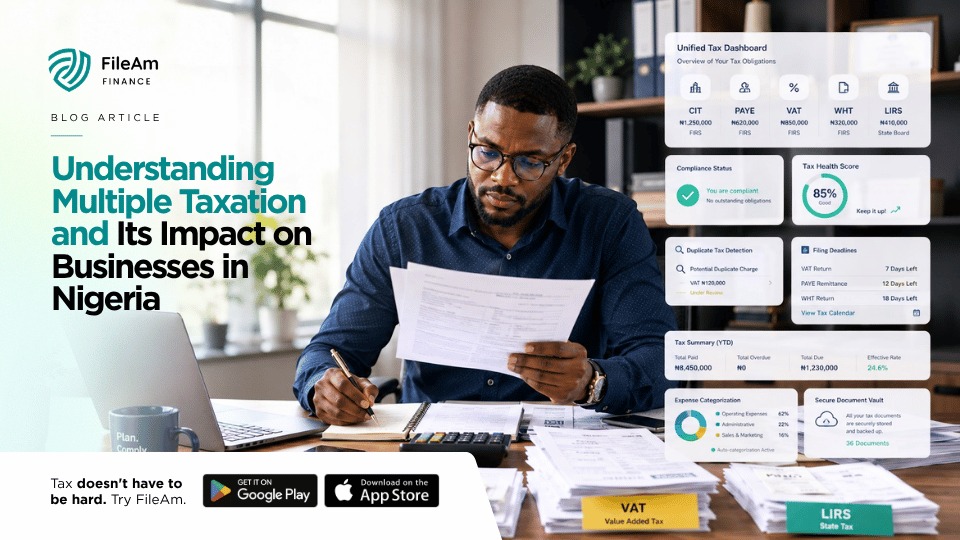
Running a business in Nigeria comes with several financial responsibilities, and taxation is one of the most important. While taxes are necessary for national development and public services, many Nigerian businesses face a major challenge known as multiple taxation. This issue has continued to affect startups, SMEs, and even large corporations by increasing operational costs and making tax compliance more difficult.
Under multiple taxation in Nigeria, businesses are expected to comply with several tax obligations. However, the presence of overlapping taxes and levies from different government agencies often creates confusion and financial pressure for business owners.

This blogpost expantiates on multiple taxation, its causes, how it affects businesses, and practical ways companies can manage tax compliance effectively in Nigeria.
What Is Multiple Taxation?
Corporate income tax act Nigeria attests that multiple taxation occurs when a business or individual is required to pay similar taxes to different government agencies or authorities on the same income, transaction, or activity. In Nigeria, this commonly happens when federal, state, and local government bodies impose overlapping taxes or levies on businesses.
For example, a company may pay Corporate Income Tax to the Federal Inland Revenue Service (FIRS), while also facing additional levies from state revenue agencies and local government authorities. In some cases, businesses are charged for permits, signage, environmental fees, sanitation levies, and market taxes that appear repetitive or unclear.
Although taxation itself is legal and necessary, excessive or duplicated taxes create unnecessary financial burdens for businesses.
Understanding the Corporate Income Tax Act Nigeria
The Corporate Income Tax Act Nigeria is one of the major laws governing the taxation of companies operating in the country. The Act regulates how company profits are taxed and outlines the obligations businesses must fulfill regarding tax payments and filings.
Under the law, companies operating in Nigeria are generally required to pay Company Income Tax (CIT) on their profits. The current tax rates vary depending on the size and annual turnover of the company.
Small businesses with lower annual turnover may enjoy exemptions or reduced tax obligations, while medium and large companies are subject to standard corporate tax rates. The Federal Inland Revenue Service (FIRS) is responsible for administering and collecting these taxes.
While the Act itself provides structure and clarity for corporate taxation, businesses often struggle because additional taxes and levies from other authorities are introduced alongside federal tax obligations.
Common Taxes Businesses Pay in Nigeria
To better understand the issue of multiple taxation, it is important to know the different taxes businesses commonly pay in Nigeria.
Corporate Income Tax
Corporate Income Tax is charged on the profits made by companies operating in Nigeria. This tax is regulated under the Corporate Income Tax Act Nigeria.
Value Added Tax (VAT)
VAT is charged on goods and services supplied by businesses. Companies are required to collect VAT from customers and remit it to the appropriate authority.
Withholding Tax
Withholding Tax is deducted at the source during certain business transactions such as contracts, consultancy services, and rent payments.
PAYE Tax
Businesses with employees must deduct Pay As You Earn (PAYE) tax from staff salaries and remit it to state tax authorities.
Local Government Levies
Many businesses also pay local government charges such as:
- signage fees
- environmental levies
- market taxes
- sanitation charges
- business premises permits
When these taxes and levies become excessive or overlap, businesses begin to experience multiple taxation challenges.
Causes of Multiple Taxation in Nigeria
Several factors contribute to the problem of multiple taxation in Nigeria.
Overlapping Tax Authorities
One major cause is the involvement of multiple tax authorities at federal, state, and local government levels. Each authority often introduces separate taxes or levies, creating confusion for businesses.
Poor Coordination Between Agencies
Lack of proper coordination among tax agencies leads to duplication of taxes and inconsistent tax administration. Businesses may receive similar demands from different authorities without clear explanations.
Informal Revenue Collection Practices
In some areas, unauthorized agents or informal revenue collectors impose questionable levies on businesses. Many SMEs pay these charges out of fear of penalties or harassment.
Lack of Tax Awareness
Many business owners do not fully understand the corporate income tax act Nigeria as well as the taxes applicable to them under Nigerian law. This makes it difficult to identify illegal or duplicated tax demands.
Effects of Multiple Taxation on Businesses
Multiple taxation has significant negative effects on businesses across different sectors.
Increased Operational Costs
Businesses already dealing with inflation, rising exchange rates, and high production costs face additional pressure when multiple taxes are introduced. These expenses reduce profitability and affect overall business sustainability.

Reduced Business Growth
Many SMEs struggle to expand because a large portion of their revenue goes toward taxes and levies. Instead of investing in growth, hiring, or innovation, businesses focus on surviving tax pressure.
Discouragement of Investments
Investors are often discouraged by complex tax systems and excessive taxation. Foreign and local investors prefer environments where tax policies are clear, transparent, and predictable.
Compliance Challenges
Managing multiple taxes can become overwhelming for business owners, especially those without proper accounting systems or tax professionals. Missing deadlines or filing incorrect returns can lead to penalties and legal issues.
Risk of Business Closure
Some small businesses eventually shut down because they cannot keep up with excessive taxes, levies, and compliance requirements.
How Multiple Taxation Affects SMEs Differently
Small and medium-sized enterprises (SMEs) are among the most affected by multiple taxation in Nigeria.
Unlike larger corporations, SMEs often operate with limited capital and smaller profit margins. Paying multiple taxes significantly reduces the funds available for business operations and expansion.
Many SMEs also lack dedicated finance or compliance teams. As a result, business owners handle tax matters themselves, which increases the likelihood of errors, missed filings, and penalties.
Additionally, some small businesses operate informally and may not fully understand their legal tax obligations. This makes them vulnerable to exploitation by unauthorized revenue agents demanding illegal levies.
For startups and growing businesses, multiple taxation can slow innovation and discourage entrepreneurship.
Government Efforts to Reduce Multiple Taxation
The Nigerian government has made several efforts to address the issue of multiple taxation and improve the ease of doing business.
Tax Harmonization Policies
Authorities have introduced policies aimed at harmonizing taxes across different levels of government to reduce duplication and confusion.
The Role of the Joint Tax Board (JTB)
The Joint Tax Board works to improve cooperation among tax authorities and promote uniform tax administration across Nigeria.
Tax Reforms and Digitalization
Recent reforms have encouraged the digitalization of tax filing and payment processes. Electronic tax systems help improve transparency and reduce informal collections.
Although progress is being made, many businesses still experience taxation challenges due to inconsistent implementation and enforcement.
How Businesses Can Manage Multiple Taxation Effectively
While businesses may not completely avoid taxation, there are several practical steps they can take to reduce compliance risks and manage taxes more effectively.
Maintain Proper Financial Records
Accurate bookkeeping helps businesses monitor tax obligations, prepare correct filings, and avoid penalties. Proper records also make it easier to identify suspicious or duplicated tax demands.
Understand Applicable Taxes
Business owners should understand which taxes legally apply to their company based on industry, location, and business structure. Knowing your obligations reduces the risk of overpayment.
Work With Tax Professionals
Tax consultants and compliance experts can help businesses navigate complex tax regulations and ensure compliance with Nigerian tax laws.
Embrace Digital Tax Management
Using digital platforms simplifies tax documentation, filing, and compliance tracking. Businesses can reduce errors, improve organization, and manage deadlines more efficiently.
Simplify Tax Compliance With FileAm
Managing taxes manually can become stressful, especially when dealing with multiple tax obligations and compliance deadlines. This is where digital solutions like FileAm can make a significant difference.
FileAm helps businesses simplify document management, improve organization, and support smoother compliance processes. Instead of struggling with scattered records and manual paperwork, businesses can centralize important documents and manage tax-related information more efficiently.
With a reliable digital system, businesses can:
- organize financial and compliance documents
- reduce filing errors
- improve operational efficiency
- simplify tax preparation processes
- maintain better compliance records
For SMEs and growing companies, adopting digital compliance solutions can reduce stress and improve overall business management.
Businesses looking to streamline compliance processes and improve operational efficiency can explore the solutions available on FileAm’s official website.
Conclusion
Multiple taxation remains one of the major challenges affecting businesses in Nigeria today. Although taxation is essential for economic development, overlapping taxes and excessive levies create financial pressure that limits business growth and discourages investment.
Understanding the Corporate Income Tax Act Nigeria and maintaining proper tax compliance practices are important steps every business should take. Companies that adopt organized financial systems and digital compliance solutions are better positioned to manage tax obligations effectively.
As Nigeria continues to improve its tax administration systems, businesses must also take proactive steps to stay compliant, reduce risks, and improve operational efficiency. The Corporate Income Tax Act requires businesses in Nigeria to compute, file, and pay tax on their profits. Other than these, businesses may face tax audits or other tax risks.
Digital solutions like FileAm can help businesses simplify document management and support smoother compliance processes in an increasingly complex tax environment.
Leave a Reply