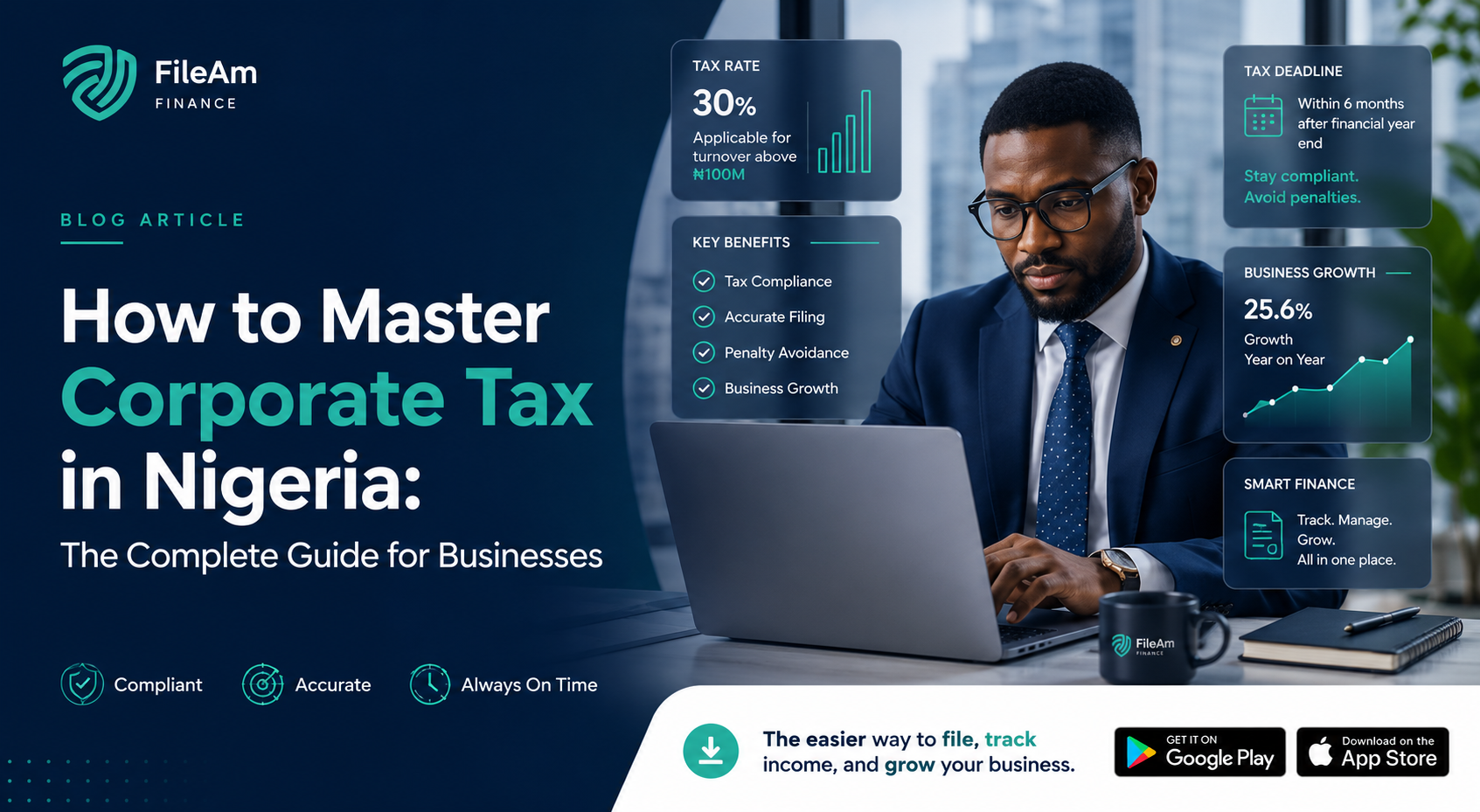
Running a successful business involves more than making sales and generating profits. Every registered company in Nigeria has legal obligations, and one of the most important is understanding corporate tax in Nigeria. Whether you own a startup, a growing small business, or a large corporation, complying with tax regulations is essential for avoiding penalties, building credibility, and contributing to national development.
Many entrepreneurs mistakenly believe that corporate taxation only affects large multinational companies. In reality, every incorporated company operating in Nigeria should understand its tax obligations, filing deadlines, applicable tax rates, and available incentives. Having this knowledge not only helps businesses remain compliant with the law but also enables them to plan their finances more effectively.
According to the existing draft, Corporate Income Tax (CIT) is administered by the Federal Inland Revenue Service (FIRS), and companies are generally required to file annual tax returns within six months after the end of their financial year using the prescribed filing process.
In this comprehensive guide, you’ll learn everything you need to know about corporate tax in Nigeria, including:
- What corporate tax means
- Who is required to pay it
- Current corporate tax rates
- How corporate tax differs from personal income tax
- Filing requirements
- Tax incentives available to businesses
- Common compliance mistakes
- Practical tips for staying compliant
- How digital tools like FileAm can simplify the entire process
By the end of this guide, you’ll have a clearer understanding of how corporate tax in Nigeria works and how your business can meet its obligations with confidence.
What Is Corporate Tax in Nigeria?
Corporate tax in Nigeria, commonly referred to as Corporate Income Tax (CIT), is a tax imposed on the profits earned by registered companies. Unlike taxes paid by individuals on personal income, corporate tax applies to the taxable profits generated from business operations.
The purpose of corporate taxation goes beyond generating government revenue. It provides funding for public infrastructure, healthcare, education, security, transportation, and other essential services that support economic development.
The draft article explains that corporate taxation in Nigeria is administered by the Federal Inland Revenue Service (FIRS) and that companies are generally assessed based on their accounting year, with annual returns filed no later than six months after the financial year ends.
In simple terms, if your company generates taxable profits, you are expected to calculate the applicable corporate income tax, submit the required returns, and pay the tax within the prescribed deadline.
Corporate tax serves several important objectives:
- It generates revenue for government development projects.
- It promotes fairness by ensuring profitable companies contribute to national development.
- It encourages accountability and transparency in business operations.
- It creates a formal business environment that attracts investors.
Businesses that maintain proper accounting records throughout the year often find tax filing significantly easier than those attempting to organize their finances at the last minute.

Who Pays Corporate Tax in Nigeria?
One of the most common questions business owners ask is whether every business is required to pay corporate income tax.
The answer depends largely on the legal structure of the business.
The source article explains that companies incorporated, registered, or effectively managed in Nigeria are generally subject to corporate income tax. Foreign companies may also be liable where they derive profits from Nigeria through a taxable presence such as a permanent establishment, local agent, construction or installation projects, service provision, or significant economic presence through digital activities.
Businesses commonly required to consider corporate tax in Nigeria include:
- Limited Liability Companies (Ltd)
- Public Limited Companies (PLC)
- Foreign companies operating in Nigeria through taxable activities
- Companies with significant economic presence in Nigeria
- Registered subsidiaries of international businesses
In contrast, sole proprietorships and many freelancers are generally taxed under the personal income tax system rather than the corporate income tax framework, because the business and the owner are not treated as separate legal entities in the same way. The draft specifically notes that for one-man businesses or freelancers, personal and business taxes are merged. Understanding whether your business falls within the corporate tax regime is the first step toward maintaining compliance and avoiding unnecessary penalties.
Corporate Tax Rates in Nigeria
One of the most important aspects of corporate tax in Nigeria is understanding how tax rates are determined.
The source material outlines the following structure:
| Annual Turnover | Corporate Tax Rate |
| Less than ₦25 million | 0% |
| ₦25 million – ₦100 million | 20% |
| Above ₦100 million | 30% |
This tiered system is intended to reduce the tax burden on smaller businesses while requiring larger companies with greater earning capacity to contribute a higher percentage.
For example:
- A small technology startup earning ₦18 million in annual turnover falls within the exempt category described in the draft.
- A medium-sized manufacturing company with ₦70 million turnover would fall within the middle tax bracket outlined above.
- A multinational company generating over ₦100 million in annual turnover would be subject to the highest rate identified in the source.
Business owners should remember that turnover alone does not replace the need for proper accounting records. Accurate bookkeeping, financial statements, and supporting documentation remain essential for determining tax obligations and preparing annual filings. A corporate tax rate of 20% applies to their earnings, while large companies with a turnover of over 100 million pay 30%.
Difference Between Corporate Tax and Personal Income Tax
Many people use the terms corporate tax and personal income tax interchangeably, but they are two different tax systems that apply to different taxpayers and different types of income. Understanding the distinction is important for entrepreneurs, company directors, and business owners seeking to comply with corporate tax in Nigeria.
According to the FIRS, four major areas where these tax systems differ: who pays the tax, how it is calculated, the potential for double taxation, and the filing requirements and deductions available.
1. Who Pays the Tax?
The most obvious difference lies in the taxpayer.
Corporate tax is paid by legally registered companies because a company is recognized as a separate legal entity from its owners. This means the company earns income, incurs expenses, files tax returns, and pays taxes in its own name.
On the other hand, personal income tax is paid by individuals on earnings such as salaries, wages, bonuses, rental income, investment returns, and other personal sources of income. Sole proprietors and many freelancers generally fall under the personal income tax system because the business and the owner are treated as one entity.
2. How the Tax Is Calculated
Another key distinction concerns the calculation method.
Corporate tax is generally calculated on a company’s taxable profits after allowable business expenses have been deducted. Typical operating expenses include staff salaries, office rent, utilities, marketing costs, and other legitimate business expenditures.
Personal income tax, however, generally follows a progressive structure in which higher income levels attract higher tax rates. Individuals may also qualify for personal reliefs and deductions before their taxable income is determined.
3. Double Taxation
One unique feature of corporate tax in Nigeria is the possibility of double taxation.
The source explains that a company’s profits may first be taxed at the corporate level. If those profits are later distributed to shareholders as dividends, the shareholders may also be taxed on the dividend income, resulting in a dual tax effect.
4. Filing Requirements and Deductions
Companies and individuals also have different filing obligations.
Companies can generally deduct qualifying business expenses such as operational costs, depreciation, and employee benefits when determining taxable profits, whereas individuals claim reliefs designed for personal circumstances. Understanding these differences helps business owners determine which tax laws apply to them and avoid costly filing mistakes.

How Is Corporate Tax Calculated?
Calculating corporate tax in Nigeria begins with determining a company’s taxable profit.
In practical terms, taxable profit is the amount that remains after allowable business expenses have been deducted from business income.
The draft explains that corporate tax is generally assessed on a company’s net profit after deducting business expenses such as payroll, rent, and operational costs.
Although every company’s financial situation is unique, the basic calculation process typically involves the following steps:
- Determine the company’s total annual revenue.
- Subtract allowable operating expenses.
- Calculate taxable profit.
- Apply the applicable corporate tax rate based on the company’s turnover category.
- Prepare and submit the required tax returns.
For example, a company that earns ₦80 million in annual turnover would first prepare accurate financial statements to determine its taxable profit before applying the relevant tax treatment described in the source.
Because tax calculations involve financial records, maintaining accurate bookkeeping throughout the year is one of the most effective ways to simplify compliance.
Corporate Tax Filing Requirements
Paying corporate tax in Nigeria involves more than calculating tax liabilities. Companies are also expected to meet annual filing obligations.
The source states that companies are required to file annual tax returns using Form CIT 001 and pay any self-assessed tax no later than six months after the end of their financial year.
Preparing for annual filing generally requires businesses to maintain:
- Accurate accounting records
- Financial statements
- Revenue records
- Expense documentation
- Payroll records
- Supporting business documents
Good record-keeping makes tax filing faster, improves accuracy, and reduces the likelihood of errors during compliance.
Many businesses struggle with tax season because receipts, invoices, and expense records have not been properly organized throughout the year. Using digital bookkeeping and tax management software can significantly reduce this burden by keeping financial records in one secure location.
Common Corporate Tax Filing Deadlines
One of the easiest ways to avoid unnecessary penalties is to understand filing timelines.
According to the draft article, companies should submit their annual returns and pay self-assessed tax within six months after the end of their financial year.
Rather than waiting until the filing deadline approaches, businesses should develop a year-round compliance routine by:
- Recording transactions regularly.
- Reconciling bank accounts monthly.
- Maintaining up-to-date accounting records.
- Reviewing financial statements periodically.
- Preparing tax documentation well before filing season.
A proactive approach reduces stress and helps businesses remain compliant throughout the year.
Common Mistakes Businesses Make
Despite the availability of tax guidance, many companies still encounter compliance challenges. Some of the most common mistakes include:
Poor Record Keeping
Missing invoices, misplaced receipts, and incomplete financial records can make it difficult to prepare accurate tax returns.
Waiting Until the Deadline
Leaving tax preparation until the final weeks before filing often results in errors, unnecessary pressure, and incomplete documentation.
Mixing Business and Personal Finances
Separating company finances from personal spending makes bookkeeping more accurate and simplifies tax reporting.
Misunderstanding Tax Obligations
Some business owners incorrectly assume they are exempt from corporate tax in Nigeria without first confirming whether their company falls within the applicable categories.
Ignoring Professional Advice
As businesses grow, tax obligations often become more complex. Consulting qualified professionals or using reliable tax software can help businesses remain compliant while reducing administrative workload.
Practical Tips for Staying Compliant
Tax compliance should not be viewed as a once-a-year activity. Instead, businesses should build compliance into their everyday operations.
Some practical habits include:
- Keep digital copies of invoices and receipts.
- Maintain accurate accounting records throughout the year.
- Reconcile financial transactions regularly.
- Monitor annual turnover to understand the applicable tax category.
- Prepare financial statements promptly after the financial year ends.
- File returns before the deadline.
- Use trusted accounting or tax management software to automate routine tasks.
Developing these habits not only simplifies corporate tax in Nigeria but also improves financial decision-making and business transparency.
Tax Incentives Available to Nigerian Companies
One of the biggest advantages of understanding corporate tax in Nigeria is learning about the tax incentives that may be available to eligible businesses. These incentives are designed to encourage investment, stimulate economic growth, promote exports, and support strategic sectors of the economy.
The draft article explains that tax incentives are special provisions within Nigeria’s tax system that reduce a taxpayer’s overall liability through exemptions, deductions, or credits. Their purpose is to encourage businesses to invest in priority sectors, create employment, and contribute to national development.
Some of the common incentives highlighted in the source include:
Tax Holidays
Tax holidays provide temporary tax reductions or exemptions for qualifying new businesses or businesses operating in selected industries. These incentives allow companies to reinvest more of their profits during their early years of operation.
Tax Exemptions
Certain types of income or business activities may qualify for complete or partial tax exemptions where provided by law. These exemptions are intended to encourage investment in sectors considered important to the Nigerian economy.
Capital Allowances
Businesses invest significantly in machinery, equipment, vehicles, office buildings, and other long-term assets. Capital allowances enable companies to recover part of these investment costs over time by deducting qualifying amounts from taxable profits.
Export Incentives
The source also explains that Export Processing Zones (EPZs) and Free Trade Zones (FTZs) provide tax advantages for qualifying export-oriented businesses. Additionally, profits from companies supplying inputs exclusively for export manufacturing may qualify for tax exemption, subject to the applicable certification requirements.
Business owners should always determine whether they qualify for any available incentives before preparing their annual corporate tax returns.
Why Corporate Tax Matters to Nigeria’s Economy
Many business owners view taxation solely as a legal obligation. However, corporate tax in Nigeria plays a much broader role in supporting economic development and creating an environment where businesses can thrive.
The draft identifies several reasons why corporate taxation remains important to Nigeria’s economy.
1. Revenue Generation
Corporate income tax provides the government with resources needed to finance public services, infrastructure, education, healthcare, and national development projects. These revenues support the environment in which businesses operate.
2. Economic Development
Taxes collected from businesses help fund investments in roads, electricity, water supply, transportation, and other infrastructure. Better infrastructure reduces business costs, improves productivity, and attracts both local and foreign investors.
3. Fairness and Income Redistribution
A well-designed tax system ensures that companies with greater earnings contribute more toward national development. According to the source, this supports programmes that benefit the wider population and helps reduce economic inequality.
4. Diversifying Government Revenue
Nigeria has historically depended heavily on oil revenues. The source explains that corporate tax in Nigeria provides a more stable and diversified source of government income, making the economy less vulnerable to fluctuations in global oil prices.
5. Encouraging Corporate Responsibility
Paying taxes demonstrates that businesses are contributing to the communities in which they operate. Corporate taxation encourages responsible corporate citizenship while supporting public services that benefit everyone.
6. Promoting Business Formalization
The draft further notes that an effective corporate tax system encourages businesses to register formally, improve transparency, strengthen accountability, and increase access to financing opportunities.
Ultimately, a strong tax system benefits both government and businesses by creating a more stable and predictable economic environment.
Frequently Asked Questions (FAQs)
What is corporate tax in Nigeria?
Corporate tax in Nigeria is a tax imposed on the taxable profits of registered companies. It is administered by the Federal Inland Revenue Service (FIRS), and eligible companies are generally required to file annual tax returns and meet applicable payment obligations.
Who is required to pay corporate tax in Nigeria?
Companies that are incorporated, registered, or effectively managed in Nigeria are generally subject to corporate income tax. Certain foreign companies with a taxable presence in Nigeria may also be liable.
What are the current corporate tax rates in Nigeria?
According to the source:
- Annual turnover below ₦25 million – 0%
- Annual turnover between ₦25 million and ₦100 million – 20%
- Annual turnover above ₦100 million – 30%
When should companies file their corporate tax returns?
The draft states that companies should file their annual returns and pay self-assessed tax within six months after the end of their financial year.
Can businesses claim tax incentives?
Yes. Depending on eligibility, businesses may benefit from incentives such as tax holidays, tax exemptions, capital allowances, and export-related incentives described in the source.
How can businesses make tax compliance easier?
Businesses can simplify corporate tax in Nigeria by:
- Keeping accurate financial records.
- Organizing receipts and invoices throughout the year.
- Preparing financial statements early.
- Filing returns before deadlines.
Using reliable digital tax management software to streamline record-keeping and filing.
Conclusion
Understanding corporate tax in Nigeria is essential for every registered business, regardless of its size or industry. Beyond being a legal requirement, corporate tax compliance helps businesses build credibility, improve financial management, and contribute to Nigeria’s long-term economic development.
As this guide has shown, successful tax compliance begins with understanding who is liable to pay corporate tax, the applicable tax rates, filing requirements, available incentives, and the broader role taxation plays in supporting public services and economic growth. The source concludes that corporate taxation is important because it generates government revenue, supports infrastructure and public services, promotes fairness, encourages responsible business practices, and helps diversify Nigeria’s revenue beyond oil. Rather than waiting until tax season to organize financial records, businesses should adopt a proactive approach by maintaining accurate bookkeeping throughout the year. This reduces stress, minimizes errors, and makes annual filing significantly more efficient.
Simplify Corporate Tax Compliance with FileAm
Managing corporate tax in Nigeria doesn’t have to be overwhelming. With the right digital tools, businesses can keep financial records organized, monitor transactions, prepare for filing deadlines, and simplify compliance from one secure platform.
FileAm helps businesses spend less time searching for receipts, invoices, and financial documents while making tax preparation faster, more accurate, and less stressful.
Whether you’re a startup, an SME, or a growing enterprise, staying compliant begins with good record-keeping, and FileAm is designed to help you do exactly that.
Ready to simplify your business taxes? Download FileAm today and take control of your corporate tax compliance with confidence.
Leave a Reply