
Table of Contents
Tax compliance in Nigeria is becoming increasingly digital. For businesses and taxpayers, the days of relying entirely on paper forms, physical documents, and repeated visits to tax offices are gradually giving way to online systems that make tax administration faster and more accessible. Anyone can now carry out income tax filing online in Nigeria from the comfort of their homes and offices. Income tax filing online means preparing and submitting your tax return electronically rather than completing the entire process through physical forms and manual submissions.
For a company in Nigeria, this can involve preparing financial information, calculating taxable income, compiling supporting records, accessing the relevant FIRS digital platform, submitting the required information, and keeping evidence of the submission.
Instead of waiting until the deadline approaches before gathering financial records, companies can prepare their information digitally, organize documents, review their tax position, and complete the required filing through the appropriate online channels.
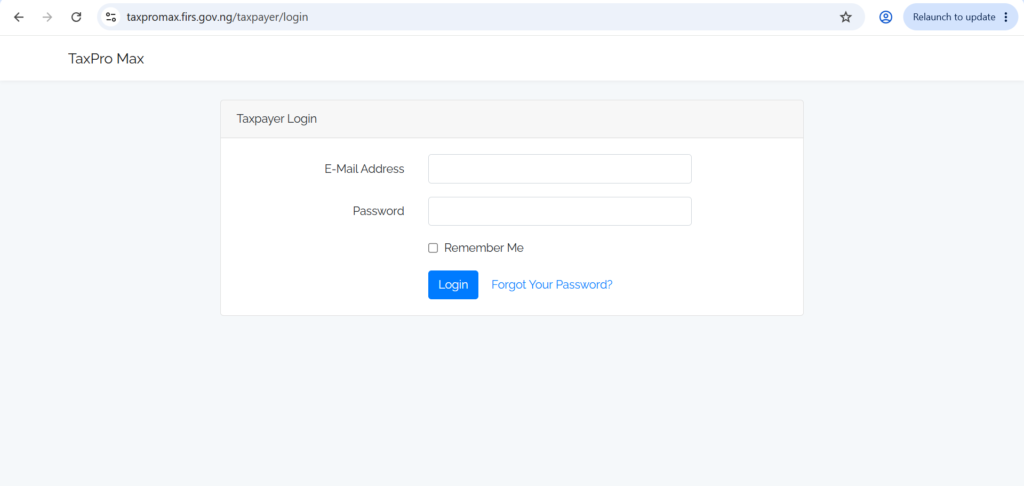
In Nigeria, the Federal Inland Revenue Service (FIRS) now Nigeria Revenue Service (NRS), provides digital tax services, including TaxPro Max, which supports taxpayer registration and tax-related processes. The current TaxPro Max portal provides online access for taxpayers, while FIRS also operates other electronic services for tax certificates and receipts.
But using an online tax portal does not automatically make a company compliant. The quality of the information submitted still matters.
This guide explains how income tax filing online works, what businesses should prepare, the difference between manual and automated approaches, and how platforms such as FileAm can help simplify the compliance process.
Even though online filing is the channel, tax compliance is the broader process.
A company still needs to:
- Review the information before submission.
- Maintain accurate financial records.
- Identify its applicable tax obligations.
- Prepare the required tax computations.
- Gather supporting documents.
- Review the information before submission.
- File within the applicable deadline.
- Keep confirmation and payment records where applicable.
Moving these activities online simply makes the process more connected and easier to manage.
How Do I File a Tax Return Online in Nigeria?
The process of filing tax return online depends on the type of taxpayer and the tax involved. It is also primarily done through the online portals of the relevant tax authorities.
For companies, this is typically the Federal Inland Revenue Service (FIRS) portal, https://taxpromax.firs.gov.ng/ while individuals use their state internal revenue service (SIRS) portal. For instance, for online tax filing and self-service in Oyo State, use the Oyo State Internal Revenue Service Self-Service Portal. For Lagos State, use the Lagos State Internal Revenue Service e-Tax Portal. Other states operate their own distinct portals (such as FCT-IRS Tax Portal for Abuja).
Companies dealing with federal tax obligations, preparation generally begins before logging into the tax portal. Preparation before beginning online filing includes the following steps:
Step 1: Confirm Your Tax Obligation
First, establish what type of return you need to submit. Section 34(3) of the Act explicitly recognizes tax returns completed and submitted electronically as valid self-assessments. Your returns as an individual filing must include a completed self-assessment form, evidence of tax payment and your financial records.
For companies, section 11 requires audited financial statements and tax compoutations. However, for small companies, statements of accounts can stand in for full audited financial statements.
A company may have several tax responsibilities depending on its activities, structure, employees, transactions, and applicable legislation. Do not assume that every business files exactly the same returns. Understanding the obligation first prevents businesses from preparing the wrong information.
Step 2: Organize Your Financial Records
The next step is gathering the information needed to prepare the return. Depending on the filing, this may include:
- Financial statements.
- Income records.
- Expense records.
- Invoices.
- Bank information.
- Tax computations.
- Withholding tax records.
- Previous tax filings.
- Relevant supporting documents.
The more organized these records are, the easier the filing process becomes.
Step 3: Review Your Tax Computation
A tax return should not be treated as a simple data-entry exercise. Your financial statements may show accounting profit, while the amount subject to tax can depend on applicable tax rules and adjustments. Businesses should therefore review their calculations carefully before entering information into an online system. For individuals, section 13 of the tax act requires a return income from all sources, including employment income and business income.
Step 4: Access the Relevant FIRS Digital Platform
FIRS provides TaxPro Max as an online tax platform. The portal currently provides taxpayer-related services and login functionality. Businesses should use the appropriate official FIRS platform for the specific tax obligation involved. This is https://taxpromax.firs.gov.ng/
Step 5: Enter or Upload the Required Information
Once the return is prepared, the required information can be entered or uploaded through the applicable digital system.
This is where accurate preparation becomes particularly important. A mistake in a spreadsheet or supporting schedule can eventually become a mistake in the tax return.
Step 6: Review Before Submission
Before clicking submit, check:
- Company name.
- Taxpayer identification information.
- Accounting period.
- Income figures.
- Expense figures.
- Tax computation.
- Supporting schedules.
- Payment information where applicable.
A few minutes of review can prevent hours of correction later.
Step 7: Keep Evidence of Filing
After submission, retain confirmation and relevant records.
Businesses should maintain copies of:
- Submitted returns.
- Payment receipts.
- Submission confirmations.
- Supporting documents.
- Tax correspondence.
A digital filing history can become valuable when dealing with future compliance requirements.
What Is the Best Online Tax Filing Approach?
There is no single best online tax filing method for every Nigerian business.
The most effective approach depends on the size of the business, complexity of its transactions, quality of its records, internal finance resources, and tax obligations.
For a very small business with simple transactions, a straightforward digital filing process may be sufficient.
For a growing company with numerous transactions, manually collecting information every year can become inefficient.
This is where automation becomes useful.
Manual Filing vs Automated Tax Compliance
The difference between manual and automated tax management is not simply whether you use a computer.
A business can still operate a largely manual process using spreadsheets, email attachments, folders, and individual reminders—even though everything is technically digital.

Manual approach
A typical manual process might look like this:
Invoice → Spreadsheet → Accountant → Financial statements → Tax computation → Tax portal → Confirmation
Every stage depends heavily on someone remembering what needs to happen next. This can work for a small operation, but the risks increase as transaction volumes grow.
Common problems include:
- Missing documents.
- Duplicate records.
- Incorrect spreadsheet entries.
- Forgotten deadlines.
- Repeated data entry.
- Difficulty finding previous filings.
Automated approach
An automated compliance workflow aims to reduce unnecessary manual intervention.
Instead of repeatedly searching through files, businesses can organize information in a structured system and use technology to track documents, obligations, deadlines, and workflow.
The objective is not to remove professional judgment.
Rather, automation handles repetitive administrative work so finance teams can focus more attention on reviewing information and making decisions.
Automation Does Not Mean “File Without Checking”
This is an important distinction.
Businesses sometimes assume that automation means software will automatically determine everything and eliminate the need for review.
That is not how responsible tax compliance should work.
Automation can help with:
- Document organization.
- Data collection.
- Deadline reminders.
- Compliance tracking.
- Record retrieval.
- Workflow management.
But businesses still need to verify that their financial information is accurate and that the tax treatment is appropriate. Technology should reduce avoidable administrative work, not replace financial judgment.
How FileAm Can Simplify Online Tax Compliance
For many businesses, the biggest challenge with income tax filing online is not accessing the tax portal.
It is getting the information ready. A company may have financial documents in one folder, invoices in another, receipts in email, bank records in spreadsheets, and previous tax documents stored somewhere else.
This fragmentation creates unnecessary work.
FileAm can help businesses bring their tax and financial compliance activities into a more organized digital workflow.
Instead of treating filing as an isolated annual event, businesses can maintain their documentation throughout the year.
This can help finance teams:
- Organize important financial documents.
- Maintain a clearer compliance history.
- Track tax-related activities.
- Reduce time spent searching for records.
- Prepare earlier for filing deadlines.
- Improve collaboration around financial information.
The real benefit is not simply “filing online.” It is creating a system where the business is ready to file online when the time comes, meeting deadlines. Section 101 of the tax act imposes administrative penalties for failure to file and for filing inaccurate returns.
Common Mistakes When Filing Taxes Online
Digital filing is convenient, but businesses can still make serious mistakes.
Entering incorrect information
Online forms make submission faster, but they cannot automatically guarantee that every figure is correct.
Using incomplete records
A company should not rely on incomplete financial information simply because the filing deadline is approaching.
Forgetting supporting documents
Important schedules and supporting records should be Common Mistakes When Filing Taxes Online
Digital filing is convenient, but businesses can still make serious mistakes.
Entering incorrect information
Online forms make submission faster, but they cannot automatically guarantee that every figure is correct.
Using incomplete records
A company should not rely on incomplete financial information simply because the filing deadline is approaching.
Forgetting supporting documents
Important schedules and supporting records should be Important schedules and supporting records should be organized before filing.

Waiting until the deadline and missing deadlines
Technical problems, missing information, or internal approval delays can create unnecessary pressure. It is easy to lose track of dates, but companies generally have six months after the end of their accounting year to file (Section 11(5)). For PAYE returns, the deadline is strictly January 31st for the preceding year (Section 14(1)).
Assuming online means automatic compliance
Submitting something electronically does not necessarily mean the business has met every applicable tax obligation.
Income tax filing online is changing the way Nigerian businesses manage tax compliance.
Digital platforms such as TaxPro Max have made electronic tax administration an important part of the Nigerian tax environment. FIRS has also continued developing automated systems and digital services for taxpayers.
But the biggest improvement does not come from simply replacing paper with a website. It comes from creating a better process.
Businesses that maintain accurate records, organize documents throughout the year, monitor deadlines, review their tax calculations, and use digital tools effectively are better positioned to file accurately and on time.
For a small business, that can mean less time spent chasing documents. For a growing company, it can mean a more reliable compliance process. For finance teams, it can mean fewer repetitive tasks and better visibility into the company’s tax position.
In conclusion
The goal of online tax filing should therefore be more than convenience. It should be simpler, more organized, and more reliable tax compliance.
And with a structured platform such as FileAm supporting the preparation and organization side, businesses can spend less time searching for information and more time managing their finances with confidence.
Leave a Reply