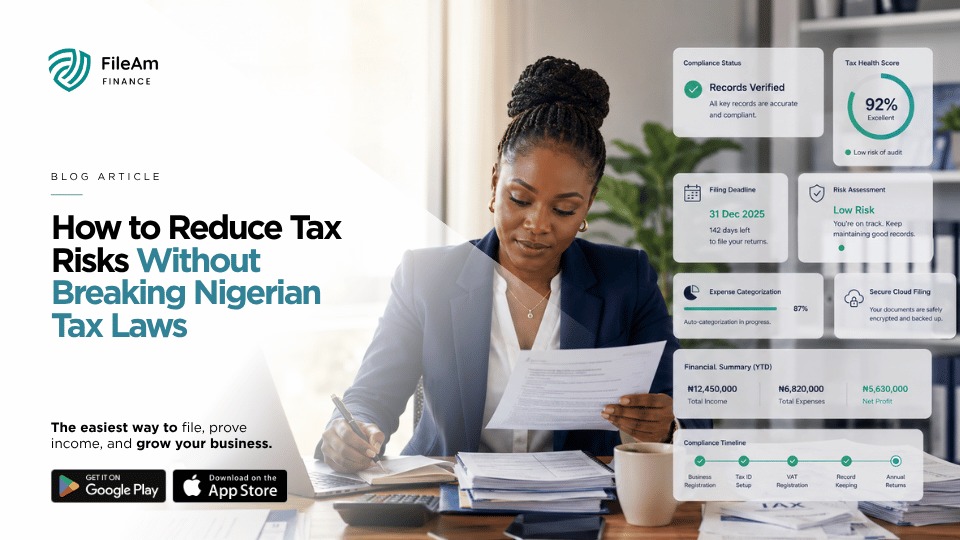
According to the corporate income tax act Nigeria, tax compliance is one of the biggest challenges facing businesses in Nigeria. It is a tax risk because it is assumed that you have broken the law once you fail to comply. While every business is expected to meet its tax obligations, many entrepreneurs unknowingly expose themselves to unnecessary tax risks through poor record-keeping, missed filing deadlines, incorrect tax calculations, or a lack of understanding of applicable tax laws.
For some business owners, tax season brings anxiety rather than confidence. They worry about unexpected assessments, penalties, interest charges, or even the possibility of a tax audit. Others mistakenly believe that reducing taxes means exploiting loopholes or engaging in illegal tax practices.
The reality is quite different.
Reducing tax risks is not about avoiding taxes; it is about building a business that complies with Nigerian tax laws, maintains accurate financial records, and adopts sound tax planning practices. When done correctly, businesses can minimize costly mistakes, avoid unnecessary penalties, and operate with greater financial certainty.
Whether you run a small startup, a growing SME, or an established company, understanding how to manage tax risks is essential for protecting your business and supporting long-term growth.
What Are Tax Risks?
Tax risks are situations that may cause a business to pay additional taxes, incur penalties, face interest charges, or become subject to investigations by tax authorities. These risks often arise from avoidable mistakes rather than intentional misconduct.
Common tax risks include:
- Filing tax returns after the due date.
- Underreporting taxable income.
- Claiming expenses that are not allowable under the law.
- Keeping incomplete accounting records.
- Failing to register for relevant taxes.
- Errors in calculating VAT, PAYE, or withholding tax.
- Inadequate documentation to support financial transactions.
Many businesses only discover these issues when they are preparing annual returns or responding to questions from tax authorities. By then, correcting the errors can be expensive and time-consuming.
What is a Tax Audit?
A tax audit is an official examination of a taxpayer’s financial records, tax returns, and supporting documents by a tax authority to verify that the correct amount of tax has been reported and paid.
In Nigeria, a tax audit may be conducted by the Federal Inland Revenue Service (FIRS) or the relevant State Internal Revenue Service, depending on the type of tax being reviewed.
During a tax audit, the tax authority may request documents such as:
- Financial statements
- Bank statements
- Sales invoices and receipts
- Purchase records
- Payroll records
- VAT records
- Withholding tax schedules
- Contracts and agreements
- Asset registers
- Previous tax returns
The purpose of a tax audit is to determine whether a business or individual has:
- Reported income accurately.
- Paid the correct amount of tax.
- Claimed only allowable deductions or exemptions.
- Complied with applicable tax laws.
- Maintained adequate financial records.
Being selected for an audit does not automatically mean a business has committed tax fraud. Many audits are routine compliance checks.
What happens after a tax audit?
After reviewing the records, the tax authority may:
- Confirm that the business is fully compliant.
- Request additional documents or explanations.
- Assess additional taxes if underpayments are identified.
- Impose penalties or interest where required by law.
- In serious cases involving deliberate tax evasion, begin enforcement or legal proceedings.
How can businesses prepare for a tax audit?
The best way to prepare is to maintain accurate financial records throughout the year. Businesses should:
- Keep receipts, invoices, and contracts.
- File tax returns on time.
- Reconcile accounting records regularly.
- Retain supporting documents for the required period.
- Seek professional tax advice when uncertain about their obligations.
A well-organized business is generally in a much stronger position to respond to a tax audit quickly and confidently.
Why Tax Compliance Matters
Tax compliance goes beyond meeting legal obligations. It strengthens the financial health and credibility of a business.
A company with good tax records is more likely to:
- Secure financing from banks and investors.
- Qualify for government contracts.
- Build trust with suppliers and business partners.
- Avoid costly legal disputes.
- Focus on growth instead of resolving compliance issues.
On the other hand, repeated tax violations can affect a company’s reputation and create financial pressures that could have been avoided with proper planning.
What Is the Corporate Income Tax Act?
The Corporate Income Tax Act (CITA) is one of Nigeria’s principal tax laws governing how companies are taxed on their profits. It establishes the legal framework for assessing, collecting, and administering corporate income tax in Nigeria.
The Act outlines:
- Which companies are required to pay corporate income tax.
- How taxable profits are calculated.
- Expenses that may be deducted before tax is assessed.
- Applicable tax rates.
- Filing deadlines and compliance obligations.
- Penalties for late filing or non-compliance.
- Certain incentives and exemptions available to qualifying businesses.
For every registered company in Nigeria, understanding the Corporate Income Tax Act is essential because it determines how much tax is payable and the procedures that must be followed.
Why Many Nigerian Businesses Pay More Than Necessary
One of the biggest misconceptions among entrepreneurs is that tax calculations are fixed and cannot be influenced.

In reality, Nigerian tax laws contain several provisions that allow businesses to legitimately reduce their taxable profits. Unfortunately, many companies fail to benefit from these provisions because they do not maintain proper records or understand how the law works.
Some of the most common mistakes include:
Poor Financial Record-Keeping
Many small businesses operate without organized bookkeeping systems.
Receipts are misplaced. Invoices disappear. Business expenses are not documented.
Bank statements are incomplete. When tax season arrives, there is little evidence to support legitimate deductions. As a result, businesses often pay tax on profits that appear higher than they actually are.
Mixing Personal and Business Expenses
It is common for business owners to use company funds for personal expenses without proper documentation. Although this may seem harmless, it creates accounting complications that can affect tax computations and make compliance more difficult.
Maintaining separate accounts for business and personal transactions is one of the simplest ways to improve financial transparency.
Ignoring Professional Advice
Many entrepreneurs believe hiring a tax consultant is an unnecessary expense.
Ironically, professional guidance often saves businesses far more money than it costs. An experienced accountant or tax adviser can identify compliance issues, allowable deductions, and planning opportunities that business owners might otherwise overlook.
Filing Returns Late
Late filing remains a recurring challenge for many companies.
Missing filing deadlines can result in financial penalties, accumulated interest, and unnecessary stress. These avoidable costs reduce profits and can affect a company’s financial health.
Corporate income tax act Nigeria encourages developing a tax compliance calendar helps businesses stay ahead of important deadlines throughout the year.
The Importance of Proper Tax Planning
Tax planning is sometimes misunderstood as finding ways to avoid paying taxes.
In reality, legitimate tax planning means organizing business activities in a manner that complies with the law while ensuring that no more tax is paid than is legally required.
Effective tax planning may involve:
- Keeping accurate accounting records.
- Tracking all allowable business expenses.
- Understanding applicable tax incentives.
- Preparing financial statements promptly.
- Filing returns before statutory deadlines.
- Consulting qualified professionals before making major financial decisions.
Good tax planning should begin at the start of the financial year; not a few days before filing deadlines.
Businesses that plan early usually experience fewer compliance issues and are better positioned to manage cash flow throughout the year.
Why Record-Keeping Is More Important Than Most Business Owners Think

The Corporate Income Tax Act does not simply require businesses to pay taxes. It also expects companies to maintain adequate records that support their tax returns.
Without proper documentation, it becomes difficult to prove that expenses were genuinely incurred for business purposes.
Useful records include:
- Sales invoices.
- Purchase receipts.
- Payroll records.
- Asset registers.
- Bank statements.
- Contracts and agreements.
- Inventory records.
- Expense vouchers.
Keeping these records organized throughout the year reduces pressure during tax filing and helps businesses respond confidently if questions arise from tax authorities.
Good documentation is not just about compliance; it also provides business owners with valuable insights into profitability, spending patterns, and financial performance.
See this scenario
When Kemi received a notification from the tax authority requesting supporting documents for her company’s tax filings, she wasn’t worried. Her business had always paid its taxes, so she believed everything was in order.
That confidence quickly disappeared.
As she searched for invoices, payment receipts, payroll records, and bank statements, she realized many important documents were missing. Some had been lost when an employee left the company. Others had never been recorded properly. Although there was no evidence of tax fraud, her inability to support certain transactions resulted in additional tax assessments, penalties, and weeks of back-and-forth correspondence.
Stories like Kemi’s are more common than many business owners realize. In Nigeria, tax risk is not limited to businesses that deliberately evade taxes. Even honest companies can face financial losses because of weak internal processes, poor documentation, or a misunderstanding of their tax responsibilities.
Kemi’s story points out to Nigerian business owner: paying taxes alone is not enough. Businesses must also be able to demonstrate that their tax filings are accurate, complete, and supported by proper documentation.
The Cost of Ignoring the Corporate Income Tax Act Nigeria
Some business owners assume that because their businesses are small, tax compliance is not a priority.
This assumption can become very expensive.
Failure to comply with the Corporate Income Tax Act may expose a business to:
- Financial penalties.
- Interest on unpaid taxes.
- Tax audits.
- Reputational damage.
- Disruptions to business operations.
- Legal consequences in serious cases.
Beyond these risks, poor tax management can also affect a company’s ability to attract investors, obtain loans, or participate in contracts that require evidence of tax compliance.
Businesses that prioritize compliance often enjoy greater credibility with financial institutions, government agencies, and potential business partners.
Understand Your Tax Obligations
Every business should know which taxes apply to its operations. Depending on the nature and size of the business, obligations may include company income tax, Value Added Tax (VAT), Pay-As-You-Earn (PAYE) deductions for employees, withholding tax, and other applicable taxes.
Build a Tax Compliance Culture, Not Just a Tax File
One of the biggest mistakes businesses make is treating taxation as a once-a-year obligation. In reality, tax compliance should be part of everyday business operations. Companies that only think about taxes when filing deadlines approach are more likely to overlook critical information or make costly errors.
Creating a tax-conscious culture means ensuring that everyone involved in the financial management of the business understands the importance of accurate record-keeping, timely reporting, and compliance with applicable tax regulations. From issuing invoices correctly to recording daily expenses, every financial transaction contributes to the accuracy of your tax records.
When tax compliance becomes part of the company’s routine rather than a last-minute exercise, the likelihood of unexpected tax issues is significantly reduced.
Carry Out Regular Tax Health Checks
Successful businesses do not wait for tax authorities to identify problems before reviewing their records. Instead, they periodically conduct internal tax reviews to identify and correct errors before they become expensive liabilities.
A tax health check may involve reviewing:
- Whether all tax returns have been filed on time.
- Whether tax payments correspond with filed returns.
- Whether accounting records agree with bank statements.
- Whether supporting documents are complete and properly stored.
- Whether recent changes in tax regulations have been reflected in the company’s processes.
Identifying discrepancies early gives businesses the opportunity to correct them voluntarily, reducing the risk of future disputes or penalties.
Leverage Technology to Reduce Human Errors
Many tax problems begin with simple administrative mistakes. Incorrect figures entered into spreadsheets, duplicate invoices, missing receipts, or forgotten deadlines can all create unnecessary tax exposure.
Modern accounting software can significantly reduce these risks by automating many routine financial tasks. Digital bookkeeping systems help businesses generate invoices, track expenses, reconcile bank transactions, monitor tax obligations, and produce financial reports more efficiently.
Cloud-based storage also ensures that important tax documents remain accessible even if physical files are damaged or misplaced. For growing businesses, investing in reliable accounting technology is often less expensive than dealing with the consequences of poor financial management.
Train Employees on Financial Compliance
Tax compliance should not rest solely on the shoulders of the business owner or accountant. Employees who handle procurement, payroll, sales, finance, and administration also play an important role in maintaining accurate financial records.
Providing periodic training helps staff understand proper documentation procedures, expense approvals, invoicing requirements, and record retention policies. A well-informed team is less likely to make mistakes that could expose the business to tax risks.
Seek Professional Guidance Before Making Major Business Decisions
Business expansion, mergers, restructuring, acquiring assets, or entering new markets often have tax implications that may not be immediately obvious. Seeking professional tax advice before implementing significant business decisions can help identify potential risks and ensure compliance with applicable laws.
Rather than viewing tax professionals as people to contact only during filing season, businesses should see them as strategic advisers who can help reduce financial risks throughout the year.
Conclusion
Every business faces tax obligations, but not every business experiences tax problems. The difference often lies in preparation, documentation, and proactive risk management.
Reducing tax risks without breaking Nigerian tax laws is not about finding shortcuts or avoiding your responsibilities. It is about establishing sound financial systems, maintaining accurate records, meeting filing deadlines, and seeking professional guidance when necessary.
Businesses that adopt these practices are better equipped to withstand audits, avoid unnecessary penalties, and make informed financial decisions. More importantly, they gain peace of mind knowing that their compliance processes can support sustainable growth in an increasingly regulated business environment.
Ultimately, the best tax strategy is not one that simply reduces today’s tax bill, it is one that protects your business from tomorrow’s financial and regulatory risks.
Leave a Reply