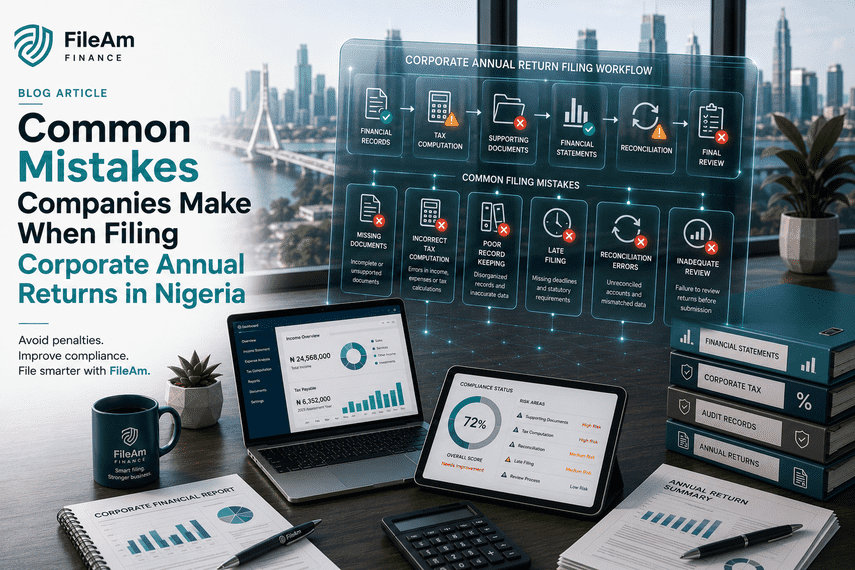
Filing a corporate annual tax return is one of the most important compliance responsibilities for every registered company in Nigeria. It provides tax authorities with an accurate picture of a company’s financial performance, taxable income, and tax obligations for a particular accounting year. While the filing process is a statutory requirement, many businesses continue to experience compliance challenges because of avoidable mistakes made during the preparation and submission of their returns.
Contrary to popular belief, most corporate tax issues do not arise because tax laws are excessively complicated. Instead, they often result from poor recordkeeping, inaccurate financial reporting, incomplete documentation, or rushed preparation during filing season. Even businesses with healthy financial operations can encounter compliance issues if their records are not properly maintained throughout the year.
Understanding corporate annual return tax in Nigeria requires more than knowing when to submit a return. It also requires maintaining accurate accounting records, applying tax rules correctly, reconciling financial statements, and ensuring that every figure reported can be supported by appropriate documentation. Businesses that overlook these responsibilities expose themselves to unnecessary administrative reviews, delayed processing, and potential financial consequences.
Many filing mistakes are entirely preventable. They occur because companies postpone preparing their financial records until the filing deadline approaches, misunderstand tax adjustments, or fail to review their returns before submission. Fortunately, these risks can be significantly reduced through proper planning, organized financial management, and consistent compliance practices throughout the accounting year.
This article examines the most common mistakes companies make when filing corporate annual returns in Nigeria, why these errors occur, their impact on business compliance, and practical strategies organizations can adopt to improve the accuracy of every filing. By understanding these common pitfalls, businesses can strengthen their compliance systems, reduce filing risks, and build greater confidence in managing corporate annual return tax in Nigeria.
Understanding Corporate Annual Return Tax in Nigeria
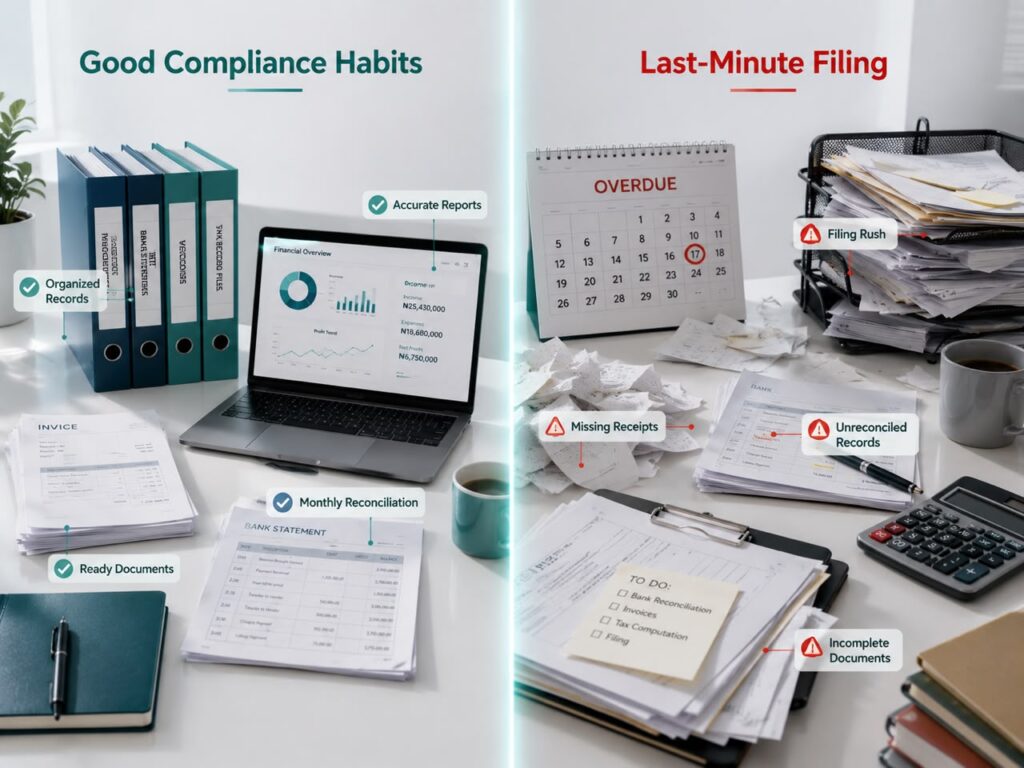
Before discussing the common filing mistakes, it is important to understand what corporate annual return tax in Nigeria involves and why accuracy is so important.
Every company is expected to prepare annual financial statements that reflect its income, expenses, assets, liabilities, and overall financial performance for a specific accounting period. These records form the basis for calculating taxable income and preparing the company’s corporate income tax return. Because tax assessments depend largely on the information submitted by the company, every figure reported should be supported by reliable financial records and appropriate documentation.
Corporate tax compliance is not simply about submitting forms before a deadline. It is an ongoing process that begins with maintaining accurate books of account throughout the financial year. Businesses that consistently record transactions, reconcile accounts, and organize supporting documents are generally better positioned to prepare accurate returns and respond to any questions that may arise during the review process.
Errors made during tax filing can have consequences that extend beyond the current reporting period. An incorrect return may affect future tax computations, delay the issuance of Tax Clearance Certificates, complicate audits, or require amendments after submission. In some cases, businesses may spend considerable time and resources correcting mistakes that could have been prevented through better preparation.
Companies should therefore approach tax filing as part of a broader financial management system rather than as an isolated annual obligation. Establishing sound accounting procedures throughout the year reduces last-minute pressure and significantly improves the accuracy of the information reported during filing season.
Ultimately, successful compliance depends on consistency. Businesses that maintain organized records, review their financial information regularly, and understand their reporting obligations are far less likely to experience avoidable filing problems.
Why Mistakes in Corporate Annual Returns Are So Common
Corporate tax filing involves several interconnected processes, including bookkeeping, financial reporting, tax computation, documentation, and regulatory compliance. Because each stage depends on the accuracy of the previous one, even a relatively small mistake can affect the overall quality of the final submission.
Understanding why these errors occur helps businesses identify weaknesses in their internal processes before they become compliance problems.
Complexity of Financial Reporting
Most businesses generate hundreds or even thousands of financial transactions during an accounting year. Sales, operating expenses, payroll, depreciation, inventory movements, tax adjustments, and other financial activities must all be recorded accurately before the annual tax return can be prepared.
Where financial records are incomplete or inconsistently maintained, preparing an accurate tax return becomes significantly more difficult. Missing transactions, incorrect account classifications, or unreconciled balances may all contribute to filing errors that affect taxable income and financial reporting.
Businesses with multiple branches, diverse income streams, or complex operational structures are particularly vulnerable if they do not maintain standardized accounting procedures throughout the year.
Lack of Structured Accounting Systems
One of the most common reasons companies experience filing difficulties is the absence of a structured accounting system.
Rather than maintaining complete financial records continuously, many organizations only begin organizing receipts, invoices, bank statements, and accounting records shortly before the filing deadline. This reactive approach increases the likelihood of omitted transactions, duplicate entries, and incomplete financial statements.
Implementing a structured bookkeeping system allows businesses to monitor their financial position throughout the year, making tax preparation far more efficient and reducing the risk of last-minute errors.
Limited Knowledge of Tax Rules
Preparing financial statements and preparing tax returns are related but distinct activities.
While financial statements are prepared according to applicable accounting standards, tax returns must also comply with relevant tax legislation and regulations. Businesses sometimes misunderstand which expenses are deductible, how tax adjustments should be applied, or how taxable income should be calculated.
These misunderstandings may result in overstated or understated tax liabilities, both of which can create unnecessary compliance issues. Regular training for finance teams and consultation with qualified tax professionals can help businesses apply tax rules more accurately.
Last-Minute Filing Pressure
Perhaps the most preventable cause of filing errors is waiting until the final weeks before submission to begin preparing the return.
When businesses rush to meet deadlines, they often:
- overlook supporting documents;
- skip reconciliation procedures;
- fail to review tax computations thoroughly;
- submit incomplete financial information; or
- miss inconsistencies that would otherwise have been identified during a careful review.
Working under unnecessary time pressure also increases the likelihood of simple data entry mistakes, incorrect calculations, and omitted disclosures.
Preparing financial statements well in advance of the date for corporate tax returns in Nigeria allows businesses sufficient time to review their records, verify calculations, resolve discrepancies, and complete their filings with greater confidence.
Ultimately, most filing mistakes do not occur because organizations lack the ability to prepare accurate returns. They occur because businesses attempt to compress several months of financial review into only a few days before the filing deadline. Developing a proactive compliance culture that emphasizes year-round financial management is one of the most effective ways to reduce filing errors and strengthen long-term corporate tax compliance.
Common Mistakes Companies Make When Filing Corporate Annual Returns
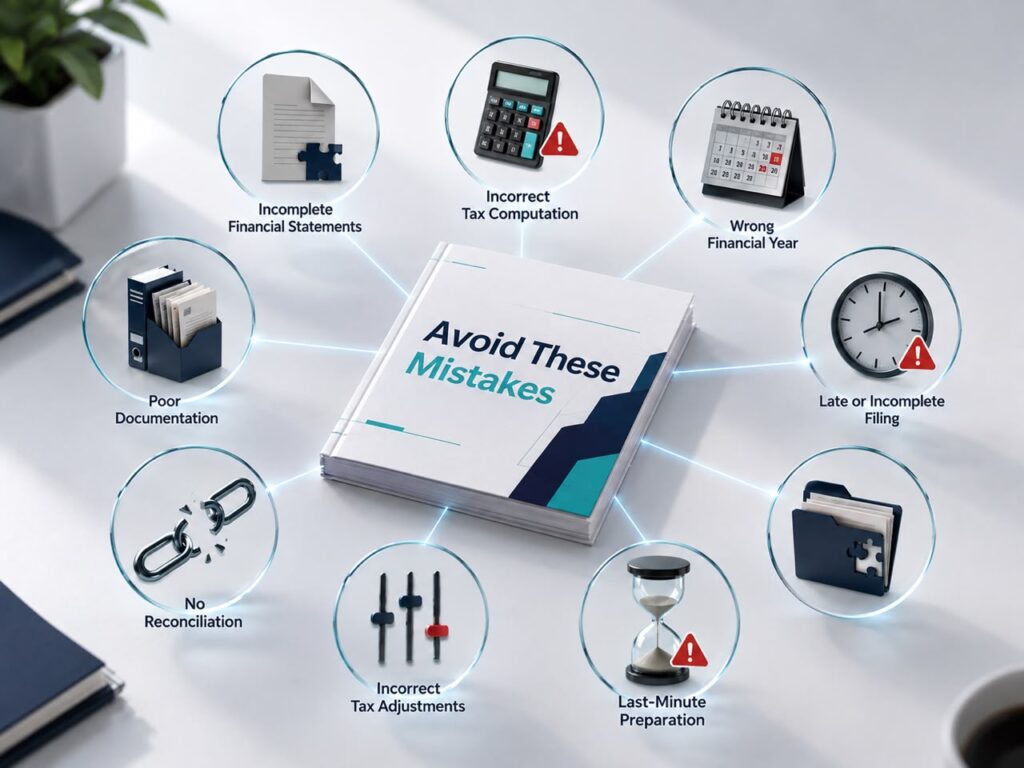
Although every business has unique financial operations, many of the filing errors encountered during the preparation of corporate annual return tax in Nigeria are remarkably similar. Most of these mistakes are avoidable and stem from weaknesses in recordkeeping, financial reporting, or tax preparation processes.
Understanding these common pitfalls helps businesses identify areas for improvement before submitting their annual corporate tax returns.
Mistake #1 – Submitting Incomplete Financial Statements
One of the most common filing mistakes is submitting financial statements that are incomplete or do not accurately represent the company’s financial position.
Examples include:
- omitted income from certain business activities;
- unrecorded operating expenses;
- incomplete balance sheets;
- missing cash flow information; and
- inconsistencies between financial statements and supporting schedules.
Incomplete financial statements undermine the integrity of the entire tax return because corporate tax computations rely on accurate accounting information. Where essential financial data is missing, taxable profit may be calculated incorrectly, resulting in inaccurate tax declarations.
Beyond affecting tax liability, incomplete financial statements may also delay processing, generate compliance queries, and increase the likelihood of further review.
Businesses can reduce this risk by completing internal financial reviews before preparing their tax returns and ensuring that all accounting records have been finalized for the reporting period.
Mistake #2 – Incorrect Tax Computation
Preparing accurate financial statements does not automatically guarantee an accurate corporate tax return.
A second common mistake involves errors during tax computation, particularly when converting accounting profit into taxable profit.
Common examples include:
- miscalculating taxable income;
- applying incorrect tax adjustments;
- treating non-deductible expenses as allowable deductions;
- omitting legitimate tax reliefs; and
- mathematical errors during computation.
These mistakes may produce either an overstatement or understatement of tax liability.
An overstatement may result in unnecessary tax payments, while an understatement may require future corrections and additional compliance procedures.
Every tax computation should therefore be reviewed independently before submission to confirm that all adjustments have been applied correctly and consistently.
Mistake #3 – Filing Using the Wrong Financial Year
Corporate tax returns must correspond with the correct accounting period.
However, some companies mistakenly prepare returns using incorrect financial year information.
This may occur when businesses:
- confuse reporting periods;
- include transactions from multiple accounting years;
- use outdated financial statements; or
- apply the wrong year-end during tax preparation.
These inconsistencies create reporting conflicts that make it difficult for tax authorities to reconcile the submitted information with the company’s financial records.
The date for corporate tax returns in Nigeria is determined by each company’s financial year-end, making accurate identification of the reporting period essential. Businesses should therefore verify that every financial statement, tax computation, and supporting document relates to the same accounting year before submission.
Maintaining a documented compliance calendar can help organizations avoid this common mistake in future reporting cycles.
Mistake #4 – Submitting Late or Incomplete Returns
Another significant compliance challenge occurs when businesses either submit their returns after the applicable deadline or fail to include all required supporting documentation.
Incomplete submissions may include:
- missing audited financial statements;
- omitted computation schedules;
- incomplete supporting records;
- unsigned documentation; or
- partially completed filing information.
Late filing is often the result of delayed financial reporting rather than the filing process itself. Businesses that postpone preparing their records until the final weeks before submission frequently struggle to gather all necessary documentation before the deadline.
Submitting incomplete information rarely speeds up compliance. Instead, it often leads to requests for additional information, processing delays, or rejection of the filing until all required documents have been provided.
Developing a year-round documentation process enables businesses to prepare complete returns well before filing deadlines, reducing the pressure associated with last-minute compliance activities.
Mistake #5 – Poor Documentation and Recordkeeping
Strong financial documentation is the foundation of accurate tax compliance.
Unfortunately, many businesses maintain accounting records inconsistently, making it difficult to support figures reported in their annual returns.
Common documentation problems include:
- missing invoices;
- lost receipts;
- incomplete payment records;
- poor transaction histories; and
- weak audit trails.
Even where reported figures are accurate, insufficient documentation makes it difficult to verify those figures during regulatory reviews.
Businesses should establish organized document management procedures throughout the year rather than attempting to reconstruct financial records during filing season.
Digital recordkeeping systems can also improve document retrieval, strengthen audit readiness, and reduce the likelihood of omitted information during tax preparation.
Mistake #6 – Ignoring Financial Reconciliation Before Filing
Financial reconciliation is one of the most important quality assurance processes before submitting a corporate tax return.
However, many companies overlook this step.
Without proper reconciliation, businesses may submit returns containing inconsistencies between:
- accounting records;
- bank statements;
- VAT records;
- payroll records; and
- supporting financial schedules.
These discrepancies often remain unnoticed until after submission, creating avoidable correction procedures and additional administrative work.
Reconciling financial records before filing allows businesses to identify inconsistencies early, resolve outstanding issues, and improve the overall reliability of their tax returns.
Routine monthly reconciliations also reduce the amount of work required at year-end and contribute to more accurate financial reporting throughout the accounting period.
Mistake #7 – Misunderstanding Tax Adjustments
Many businesses prepare accurate accounting records but misunderstand how those records should be adjusted for tax purposes.
Common mistakes include:
- treating non-allowable expenses as deductible;
- failing to adjust accounting profit correctly;
- misunderstanding the treatment of certain expenses; and
- applying tax adjustments inconsistently.
Tax adjustments exist because accounting profit and taxable profit are not always identical.
A misunderstanding at this stage can significantly distort the company’s reported tax liability, potentially resulting in additional compliance procedures or future amendments.
Businesses should ensure that personnel responsible for tax preparation understand the distinction between accounting standards and tax legislation when preparing annual returns.
Mistake #8 – Relying on Last-Minute Preparation
Perhaps the most preventable mistake of all is delaying tax preparation until filing season.
Last-minute preparation affects nearly every aspect of the filing process.
Businesses operating under severe time pressure are more likely to:
- overlook supporting documents;
- rush financial reviews;
- make data entry mistakes;
- submit incomplete returns;
- miscalculate taxable income; and
- overlook inconsistencies requiring correction.
In many cases, the final weeks before submission are spent searching for missing documentation rather than reviewing the quality of the completed return.
Preparing financial statements throughout the year allows businesses to identify potential issues gradually rather than attempting to resolve them all immediately before filing.
Organizations that adopt continuous bookkeeping practices generally experience fewer compliance issues and produce more accurate corporate tax returns than those relying solely on year-end preparation.
Ultimately, last-minute filing does not simply create one additional risk; it increases the probability of every other filing mistake discussed in this article.
How These Mistakes Affect Business Compliance
Filing errors are more than simple administrative oversights; they can have lasting consequences for a company’s financial management, regulatory standing, and overall business operations. Even seemingly minor inaccuracies can create complications if they remain unresolved, particularly when they affect future reporting periods or compliance assessments.
Understanding these consequences highlights why businesses should invest in accurate recordkeeping and thorough review processes before submitting their annual corporate tax returns.
Increased Risk of Compliance Queries
One of the first consequences of filing errors is the possibility of additional compliance queries from the relevant tax authority. Where inconsistencies are identified between submitted returns, supporting documents, or previous filings, businesses may be required to provide clarification or additional documentation before their returns can be processed.
Although compliance reviews are a normal part of tax administration, avoidable filing errors often result in unnecessary administrative work that could have been prevented through careful preparation.
Higher Audit Exposure
Businesses that consistently submit incomplete or inconsistent returns may face greater scrutiny during future compliance reviews.
An inaccurate filing does not automatically trigger an audit. However, repeated inconsistencies, unexplained financial differences, or significant reporting errors may increase the likelihood of additional verification procedures.
Maintaining complete documentation and consistent financial reporting helps reduce uncertainty during regulatory reviews and strengthens a company’s compliance profile.
Delays in Obtaining Tax Clearance Certificates
Many organizations require valid Tax Clearance Certificates when applying for government contracts, securing financing, bidding for projects, or entering certain commercial transactions.
Errors in annual corporate tax filings may delay the processing of these certificates if additional clarification or amendments become necessary.
Businesses that maintain accurate records and submit complete returns generally experience fewer delays in obtaining essential compliance documents.
Reputational and Operational Impact
Consistent compliance demonstrates sound financial governance.
Conversely, repeated filing errors may affect how investors, lenders, business partners, and regulatory agencies perceive an organization’s financial management practices.
Strong compliance systems not only satisfy regulatory requirements but also contribute to better business credibility, improved investor confidence, and more effective financial planning.
Why Most Filing Mistakes Happen in the First Place
Although filing mistakes appear during the tax submission process, their underlying causes usually develop much earlier.
Most compliance challenges stem from weaknesses in internal financial management rather than the filing procedure itself.
No Year-Round Recordkeeping
Many businesses postpone organizing financial records until the end of the accounting year.
As a result, accounting teams must reconstruct months of transactions within a limited timeframe, increasing the likelihood of missing documents, incomplete reconciliations, and inaccurate reporting.
Maintaining continuous bookkeeping throughout the year significantly improves the quality of information available during tax preparation.
Weak Financial Management Systems
Disorganized accounting systems make it difficult to maintain complete financial records.
Without standardized procedures for recording transactions, filing supporting documents, and reconciling accounts, errors accumulate gradually until they become apparent during tax preparation.
Implementing structured accounting processes reduces manual work while improving financial accuracy throughout the year.
Poor Coordination Between Finance and Tax Functions
Preparing financial statements and preparing tax returns often involve different responsibilities within an organization.
Where accounting personnel and tax professionals work independently without sufficient communication, inconsistencies may arise between financial reports and tax computations.
Regular collaboration throughout the accounting year helps ensure that financial information remains consistent across all reporting processes.
A Reactive Compliance Culture
Some businesses only think about tax obligations when filing deadlines approach.
This reactive approach often results in rushed preparation, incomplete documentation, and avoidable mistakes.
By contrast, organizations that integrate compliance into their routine financial management activities generally experience fewer filing challenges and more predictable reporting outcomes.
Can Filing Mistakes Lead to the Penalty for Late Payment of Corporation Tax in Nigeria?
One of the most common concerns among businesses is whether filing errors can result in financial penalties.
While not every mistake automatically attracts sanctions, filing inaccuracies may have financial implications if they result in underreported tax liabilities or delayed compliance.
For example, where a company submits an incorrect tax computation that understates the amount of corporate income tax payable, a subsequent correction may reveal additional tax obligations. If those obligations are not settled within the applicable compliance timelines, the company may become liable for the penalty for late payment of corporation tax in Nigeria, together with any applicable statutory interest.
Similarly, businesses that delay filing because they are attempting to resolve accounting issues may also expose themselves to unnecessary compliance risks. Waiting until after the filing deadline to organize financial records often creates avoidable pressure and increases the possibility of incomplete submissions.
The most effective way to reduce exposure to penalties is to:
- maintain accurate bookkeeping throughout the accounting year;
- prepare financial statements early;
- review tax computations before submission;
- monitor the date for corporate tax returns in Nigeria based on the company’s financial year-end; and
- correct any identified errors promptly through the appropriate compliance procedures.
Taking these proactive steps enables businesses to maintain accurate compliance records while minimizing unnecessary financial exposure.
Best Practices to Prevent Corporate Tax Filing Errors
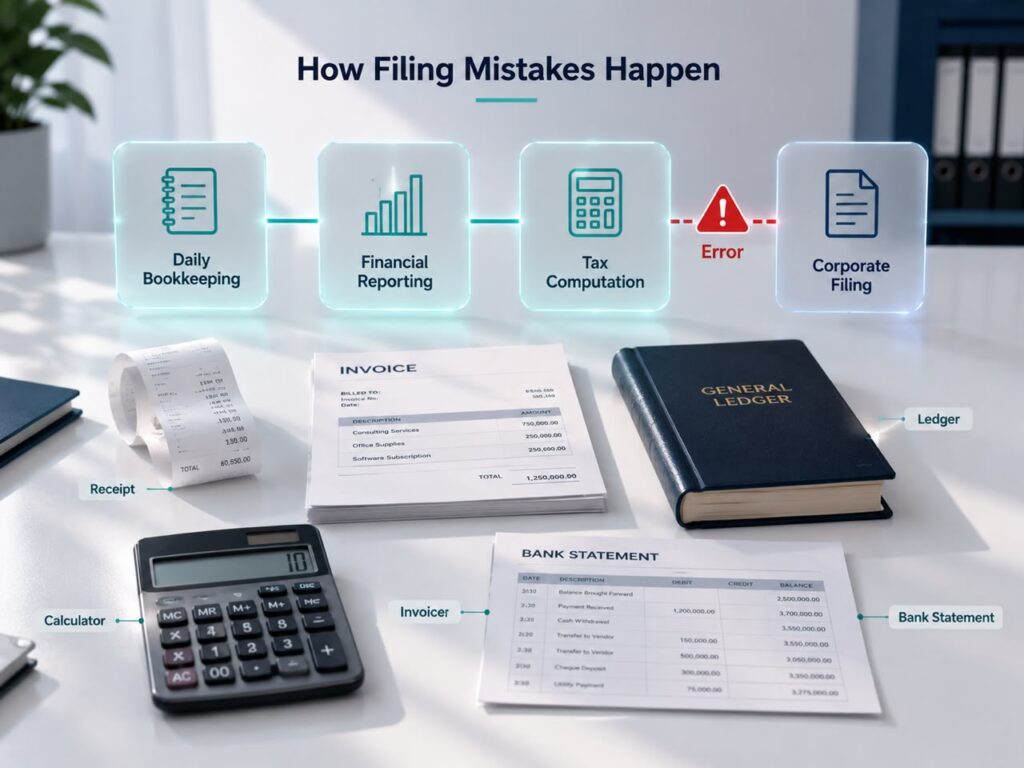
Preventing filing mistakes is significantly easier and less expensive than correcting them after submission.
Businesses can improve the quality of their corporate annual return tax filing in Nigeria by adopting several practical compliance habits.
Some recommended practices include:
- Maintain accurate bookkeeping throughout the year rather than only during filing season.
- Reconcile bank accounts, VAT records, payroll records, and accounting books every month.
- Prepare audited financial statements well before filing deadlines.
- Keep invoices, receipts, contracts, and supporting documentation organized and easily accessible.
- Review tax computations independently before submission.
- Establish an internal compliance calendar for monitoring important filing dates.
- Train finance personnel regularly on changes in tax legislation and reporting requirements.
- Seek professional advice whenever complex tax issues arise.
Organizations that embed these practices into their financial operations are better positioned to prepare complete, accurate, and timely corporate tax returns year after year.
How FileAm Helps Businesses Avoid Filing Mistakes
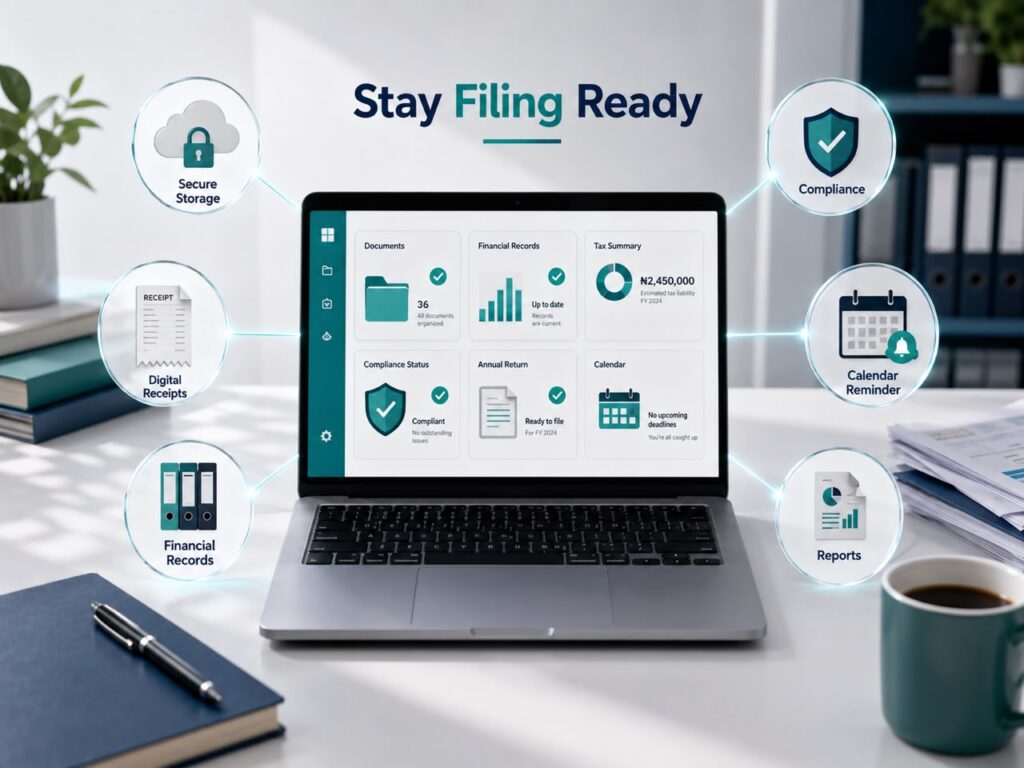
Many filing problems begin long before tax season because financial information is incomplete, inconsistent, or difficult to retrieve.
FileAm helps businesses improve financial organization by providing a structured environment for managing accounting records throughout the year.
By maintaining centralized financial information, businesses can:
- organize supporting documentation efficiently;
- improve financial visibility;
- reduce manual recordkeeping errors;
- simplify preparation of annual tax returns;
- minimize missing documentation; and
- reduce the need for last-minute reconstruction of financial records.
Rather than treating compliance as a once-a-year activity, businesses using structured financial systems are able to prepare corporate tax returns with greater confidence and improved accuracy.
Frequently Asked Questions
What are the most common mistakes companies make when filing corporate annual returns?
The most common mistakes include incomplete financial statements, incorrect tax computations, poor recordkeeping, filing with the wrong financial year, inadequate reconciliation, missing supporting documents, misunderstanding tax adjustments, and relying on last-minute preparation.
What is corporate annual return tax in Nigeria?
Corporate annual return tax in Nigeria refers to the annual corporate income tax reporting process through which companies submit their financial information and tax computations to meet their statutory tax obligations.
What is the date for corporate tax returns in Nigeria?
The date for corporate tax returns Nigeria depends on a company’s accounting year-end rather than a single nationwide filing date. Businesses should maintain an internal compliance calendar to monitor their filing obligations.
Can filing mistakes result in additional tax?
Yes. Where errors affect taxable income or tax computations, corrections may result in additional tax becoming payable or, in some cases, a reduction in tax liability if allowable deductions were previously omitted.
Can filing mistakes lead to the penalty for late payment of corporation tax in Nigeria?
They can. If filing errors result in unpaid tax that remains outstanding beyond the applicable compliance timeline, businesses may become liable for the penalty for late payment of corporation tax in Nigeria, together with any applicable statutory interest.
Conclusion
Most corporate tax filing problems are not caused by complex legislation; they result from avoidable weaknesses in financial management, recordkeeping, and preparation. As highlighted throughout this guide, businesses that maintain organized records, reconcile accounts regularly, and prepare well before filing deadlines are far less likely to encounter compliance challenges.
Successfully managing corporate annual return tax in Nigeria requires more than submitting a return before the deadline. It involves maintaining accurate financial records throughout the accounting year, understanding the date for corporate tax returns in Nigeria, applying tax rules correctly, and reviewing every submission carefully before filing.
When businesses adopt a proactive approach to compliance, they not only improve the accuracy of their filings but also reduce the likelihood of amendments, audits, and exposure to penalties for late payment of corporate tax in Nigeria. By combining sound financial management with structured compliance processes and reliable digital tools such as FileAm, organizations can make annual corporate tax filing a routine, efficient, and stress-free part of their business operations.
Leave a Reply