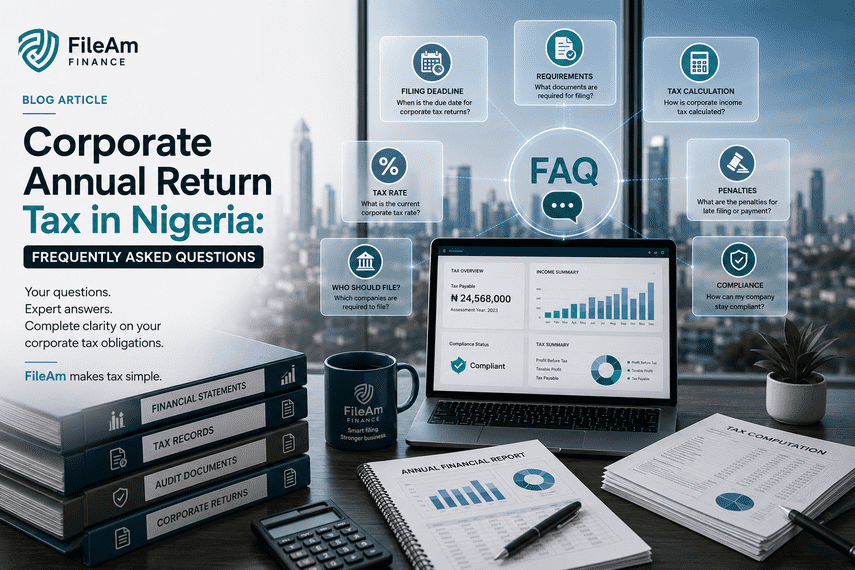
Corporate tax compliance is one of the most important legal responsibilities for companies operating in Nigeria. Whether you are managing a newly registered startup, a growing small business, or a large established enterprise, understanding your annual tax obligations is essential for maintaining good standing with regulatory authorities and avoiding unnecessary compliance issues.
Many business owners have questions about corporate annual return tax in Nigeria faqs, particularly regarding who should file, what documents are required, when returns are due, and what happens if deadlines are missed. These questions are understandable because corporate tax compliance involves more than simply paying taxes. It also requires businesses to maintain accurate financial records, prepare annual financial statements, calculate taxable income correctly, and submit complete returns within the required timeframe.
Unfortunately, many businesses only begin thinking about tax obligations when filing deadlines approach. This often results in rushed preparation, incomplete documentation, and avoidable mistakes that could have been prevented through proper planning. A clear understanding of the filing process allows companies to prepare throughout the accounting year rather than attempting to organize months of financial information at the last minute.
This comprehensive guide answers the most frequently asked questions about corporate annual return tax in Nigeria, including filing requirements, the date for corporate tax returns in Nigeria, tax calculations, compliance obligations, correction procedures, and the penalty for late payment of corporation tax in Nigeria. Whether you are filing your company’s first annual return or looking to improve your existing compliance process, these answers will help you better understand your responsibilities and prepare for successful annual tax filing.
General Questions About Corporate Annual Return Tax
What is Corporate Annual Return Tax in Nigeria?
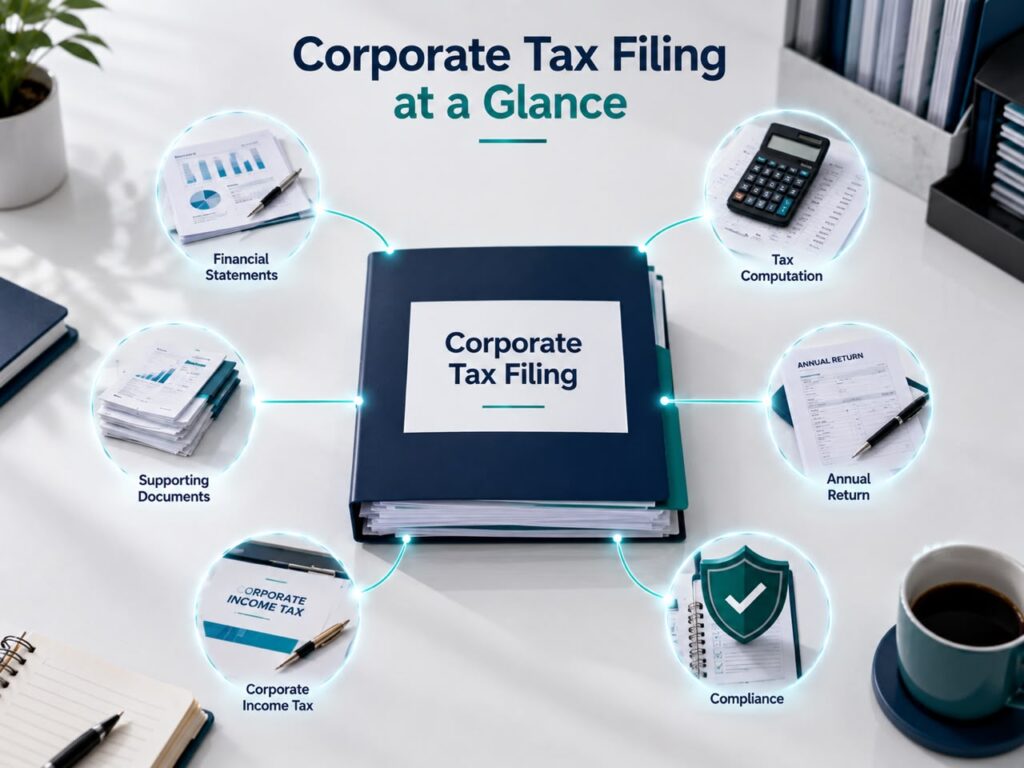
Corporate annual return tax in Nigeria refers to the annual process through which registered companies report their financial performance and taxable income to the appropriate tax authority. The return provides a comprehensive summary of the company’s financial activities during a specific accounting year and enables tax authorities to determine whether the correct amount of corporate income tax has been declared.
A typical corporate tax return includes several important components, such as:
- audited or approved financial statements;
- statements of profit or loss;
- balance sheets;
- tax computation schedules;
- capital allowance computations where applicable; and
- supporting financial documentation.
Preparing an accurate annual return is not simply an administrative exercise. It forms part of a company’s broader compliance responsibilities and provides the foundation for transparent financial reporting under Nigerian tax regulations.
Maintaining organized financial records throughout the year makes this process considerably easier and reduces the likelihood of filing errors or compliance queries.
Is Corporate Tax the Same as Annual Return Filing?
No.
Although the terms are often used interchangeably, they refer to two different aspects of corporate tax compliance.
Corporate income tax represents the actual tax payable based on a company’s taxable profit after applying the relevant provisions of Nigerian tax legislation.
Annual return filing, on the other hand, refers to the submission of financial information, tax computations, and supporting documents that enable tax authorities to assess the company’s tax position.
In simple terms:
- Corporate tax relates to the amount of tax owed.
- Annual return filing relates to reporting the financial information used to calculate that tax.
Both processes are closely connected because accurate reporting forms the basis for determining the correct tax liability. Businesses should therefore treat both obligations with equal importance to maintain complete compliance.
Who Is Required to File Corporate Annual Returns?
Every registered company operating in Nigeria is generally expected to comply with annual corporate tax filing requirements.
This obligation applies regardless of whether the company:
- generated substantial profits;
- operated at a loss;
- had minimal business activity; or
- recently commenced operations.
The filing requirement exists because annual returns provide tax authorities with information about the company’s financial position during the accounting year, irrespective of the final amount of tax payable.
Business owners sometimes assume that companies without profits have no reporting responsibilities. However, filing obligations generally continue even where tax liability is reduced, or no corporate income tax is ultimately payable.
Maintaining consistent compliance also helps businesses establish reliable tax records that support future financing, investment opportunities, and regulatory interactions.
What Is the Purpose of Corporate Tax Returns?
Corporate tax returns serve several important functions beyond determining the amount of tax payable.
They help:
- report the company’s financial performance;
- calculate taxable income accurately;
- demonstrate compliance with tax legislation;
- support transparency in financial reporting;
- create an official compliance history; and
- facilitate future regulatory assessments where necessary.
For businesses, annual returns also provide an opportunity to review financial performance, identify accounting inconsistencies, and strengthen internal financial management practices before submitting official reports.
Organizations that approach tax filing as part of their overall financial governance generally experience fewer compliance challenges and better long-term financial control.
Filing and Requirement Questions
How Often Do Companies File Corporate Tax Returns in Nigeria?
Corporate tax returns are filed once every accounting year.
Unlike monthly taxes such as VAT or payroll-related obligations, corporate income tax reporting follows the company’s annual financial reporting cycle.
This means that businesses should maintain accurate accounting records continuously throughout the year rather than attempting to prepare all financial information immediately before filing.
Keeping bookkeeping current simplifies year-end reporting, improves financial accuracy, and significantly reduces the workload associated with annual compliance.
What Documents Are Required for Corporate Tax Filing?
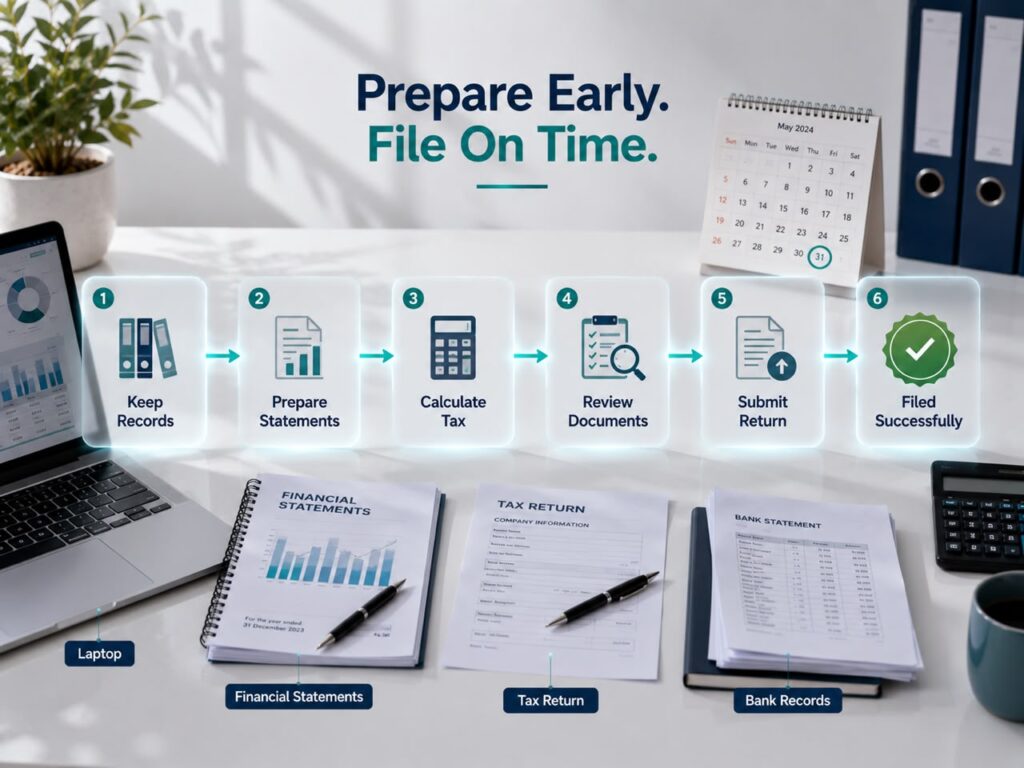
Preparing a complete corporate tax return requires more than completing a filing form.
Businesses should typically organize several supporting documents before beginning the filing process.
Common documentation includes:
- audited financial statements;
- profit and loss accounts;
- balance sheets;
- tax computation schedules;
- trial balances;
- fixed asset registers where applicable;
- invoices and receipts supporting deductible expenses;
- bank reconciliation records; and
- other accounting schedules used during financial reporting.
Preparing these documents early allows businesses to identify missing information before filing deadlines approach, reducing the likelihood of incomplete submissions or subsequent amendments.
Can a Company File Without Audited Financial Statements?
One of the most common questions businesses ask is whether audited financial statements are mandatory when filing annual corporate tax returns.
In many cases, audited financial statements form an important part of the corporate tax filing process because they provide an independent review of a company’s financial position and support the accuracy of the information reported in the tax return. These statements help demonstrate that the figures used in tax computations are based on properly prepared financial records.
However, the specific documentation required may differ depending on the size of the business, its regulatory classification, and the applicable reporting requirements. Companies should therefore ensure they understand the filing obligations that apply to their circumstances before preparing their returns.
Regardless of the documentation required, businesses should avoid waiting until filing season to prepare their financial statements. Completing financial reports early provides sufficient time to review accounting records, identify inconsistencies, and gather any supporting documentation required for a complete submission.
Well-prepared financial statements also reduce the likelihood of future amendments and contribute to smoother compliance throughout the filing process.
Is Corporate Tax Filing Mandatory for All Registered Companies?
Yes.
Corporate tax filing is generally a mandatory compliance obligation for registered companies operating in Nigeria.
Many business owners mistakenly assume that only profitable companies are required to file annual tax returns. In reality, the filing obligation is broader than the tax payment itself. Companies are expected to submit annual returns even where they did not generate taxable profits during the accounting period.
This requirement allows tax authorities to maintain accurate records of business activities, assess compliance with reporting obligations, and determine whether any corporate income tax is payable based on the company’s financial performance.
Regular compliance also benefits businesses by helping them maintain an up-to-date tax history, supporting future applications for Tax Clearance Certificates, financing opportunities, and participation in commercial or government procurement processes.
Viewing annual filing as a routine business process rather than a once-a-year administrative burden helps organizations build stronger compliance systems over time.
Deadline and Timing Questions
What Is the Date for Corporate Tax Returns in Nigeria?
One of the most frequently searched questions by business owners concerns the date for corporate tax returns in Nigeria.
Unlike some statutory filings that follow a single nationwide deadline, corporate tax returns are generally tied to each company’s financial year-end. This means there is no universal filing date that applies to every registered business.
Instead, every company should establish an internal compliance calendar based on its accounting period and monitor important reporting milestones well in advance of the filing deadline.
Waiting until the final weeks before submission often creates unnecessary pressure and increases the likelihood of incomplete documentation, calculation errors, or missed deadlines.
Businesses that prepare their financial statements shortly after the end of the accounting year generally experience a smoother filing process and are better positioned to respond to any compliance queries that may arise.
When Is Corporate Tax Return Due in Nigeria?
Corporate tax returns are generally expected to be filed within six months after the end of the company’s financial year.
For example, if a company’s accounting year ends on 31 December, the filing process should be planned well in advance so that financial statements, tax computations, and supporting documentation are completed within the applicable compliance period.
Because filing obligations depend on each company’s accounting cycle, businesses operating with different financial year-ends will naturally have different filing deadlines.
This is one of the reasons maintaining an internal compliance schedule is considered a best practice for effective tax management. It enables businesses to allocate sufficient time for financial reviews, document preparation, and internal approval before submission.
Is There a Fixed Filing Date for All Companies?
No.
There is no single filing date that applies to every registered company.
Each business follows a filing timeline based on its own accounting year, making careful planning essential.
Companies should therefore avoid relying on general assumptions about filing dates and instead monitor the reporting schedule applicable to their own financial year-end.
Businesses operating multiple subsidiaries or entities with different accounting periods should pay particular attention to their respective compliance calendars to ensure that every filing is completed within the appropriate timeframe.
Maintaining accurate records of important compliance dates also reduces the likelihood of missed deadlines and supports better financial planning throughout the year.
What Happens If I Miss the Filing Deadline?
Missing the filing deadline can create avoidable compliance challenges for businesses.
Where annual returns are not submitted within the applicable reporting period, companies may face:
- administrative penalties;
- additional compliance reviews;
- interest on outstanding obligations where applicable;
- delays in obtaining Tax Clearance Certificates; and
- disruptions to future regulatory processes.
In addition to financial implications, delayed filing may require businesses to spend additional time responding to compliance queries or updating previously submitted information.
Rather than waiting until deadlines are imminent, businesses should complete financial reporting and tax computations as early as possible after the close of the accounting year.
Early preparation provides adequate time to review supporting documents, verify tax computations, and correct any inconsistencies before official submission.
Penalty and Compliance Questions
What Is the Penalty for Late Payment of Corporation Tax in Nigeria?
A common concern among business owners is the penalty for late payment of corporation tax in Nigeria and how it differs from late filing.
Where corporate tax obligations remain outstanding beyond the applicable compliance period, businesses may become subject to financial penalties and additional charges in accordance with the relevant tax administration procedures.
Depending on the circumstances, delayed payment may also result in statutory interest being applied until outstanding obligations are settled.
The financial impact of late payment often extends beyond the immediate penalty itself. Businesses may also experience delays in obtaining Tax Clearance Certificates, additional compliance reviews, or other administrative consequences that affect normal business operations.
The most effective way to reduce exposure to these risks is to:
- maintain accurate accounting records throughout the year;
- calculate taxable income correctly;
- prepare annual returns well before filing deadlines;
- monitor the date for corporate tax returns in Nigeria carefully; and
- settle any assessed tax liabilities promptly after filing.
Businesses that integrate these practices into their routine financial management generally experience fewer compliance issues and lower administrative costs over time.
What Happens If a Company Does Not File Corporate Tax Returns?
Failure to file annual corporate tax returns may create significant compliance challenges for a business.
Beyond possible financial penalties, non-compliance may lead to:
- regulatory enforcement actions;
- compliance flags on the company’s tax records;
- increased scrutiny during future reviews;
- delays in obtaining Tax Clearance Certificates; and
- additional administrative procedures before outstanding compliance issues can be resolved.
Maintaining consistent filing habits helps businesses establish a reliable compliance history while supporting smoother interactions with tax authorities and other regulatory institutions.
Even where no corporate income tax is ultimately payable, submitting annual returns remains an important component of responsible corporate governance.
Calculation and Payment Questions
How Is Corporate Tax Calculated in Nigeria?
Corporate income tax is generally calculated by determining a company’s taxable profit for a particular accounting year. This process begins with the company’s financial statements, which summarize its income, expenses, assets, and liabilities. From there, allowable business expenses are considered and the appropriate tax rules are applied to arrive at the company’s taxable income.
Preparing an accurate tax computation requires more than basic arithmetic. Businesses must ensure that the figures reported in their financial statements are complete, properly classified, and supported by reliable documentation. Errors in revenue recognition, expense classification, or tax adjustments can result in an inaccurate tax liability and may require amendments after submission.
To improve accuracy, companies should reconcile their accounting records before beginning the tax computation process and retain supporting documents for every significant financial transaction. This approach not only simplifies filing but also strengthens compliance should additional clarification be required.
What Is the Current Corporate Tax Rate?
Corporate income tax rates in Nigeria are not identical for every business. The applicable rate depends on factors such as company size and classification.
Because tax legislation and applicable rates may change over time, businesses should ensure that they use the appropriate rate when preparing their annual corporate tax returns. Applying the wrong rate can affect the overall tax computation and may require corrections after filing.
Companies should therefore review their classification carefully before preparing their annual return and ensure that the tax computation aligns with the applicable provisions governing their category of business.
Do Companies Pay Corporate Tax If They Make No Profit?
This is one of the most misunderstood areas of corporate tax compliance.
Although a company may not generate taxable profits during a particular accounting year, it is generally still expected to comply with annual corporate tax filing requirements. Filing obligations and tax payment obligations are related but distinct.
Where there is no taxable profit, the amount of corporate income tax payable may differ according to the applicable tax rules. However, businesses should still prepare and submit their annual returns to maintain compliance and ensure that their financial position is properly reported.
Maintaining consistent filing habits also supports future compliance activities, simplifies regulatory interactions, and contributes to a reliable corporate tax history.
Correction and Adjustment Questions
Can Corporate Tax Returns Be Corrected After Submission?
Yes.
Businesses that discover genuine errors after submitting their corporate tax returns may correct those errors through the appropriate amendment or reassessment procedures, depending on the nature of the mistake.
Common examples include:
- incorrect financial figures;
- omitted supporting documentation;
- tax computation errors;
- reporting period mistakes; and
- data entry errors.
Promptly addressing identified mistakes helps maintain accurate compliance records and reduces the likelihood of inconsistencies affecting future reporting periods.
Companies should ensure that every amendment is supported by revised financial records and appropriate documentation before initiating the correction process.
What Happens If I Make a Mistake in My Tax Filing?
Discovering an error after submission does not necessarily mean a company has failed to comply with its obligations.
What is most important is how quickly the issue is identified and addressed.
Businesses that discover inaccuracies should:
- determine the nature of the error;
- review the original return;
- prepare corrected supporting documentation where necessary; and
- follow the appropriate amendment procedures.
Acting promptly helps preserve the integrity of the company’s tax records and demonstrates a responsible approach to corporate compliance.
Will I Be Penalized for Correcting a Tax Return?
Generally, genuine corrections made transparently through the proper procedures are intended to improve the accuracy of the company’s tax records.
Where businesses voluntarily identify and correct mistakes using the appropriate amendment process, the correction itself does not necessarily result in penalties. However, where an amendment reveals previously unpaid tax liabilities, businesses should resolve those obligations promptly to avoid additional compliance consequences.
Maintaining complete supporting documentation throughout the correction process also contributes to a smoother review and helps demonstrate that the amendment reflects genuine financial information.
Business-Specific Questions
Do Startups Pay Corporate Tax in Nigeria?
Registered startups are generally expected to comply with annual corporate tax filing requirements.
Whether corporate income tax is ultimately payable depends on the company’s financial performance and the applicable tax rules governing its taxable income during the reporting period.
Regardless of profitability, maintaining accurate financial records from the beginning helps startups establish sound compliance habits that will benefit the business as it grows.
Do Foreign Companies Operating in Nigeria Pay Corporate Tax?
Companies that conduct business activities within Nigeria may have corporate tax obligations relating to income generated from those activities.
Businesses with cross-border operations should maintain clear accounting records that distinguish local operations and support accurate reporting under the applicable regulatory framework.
Proper documentation becomes particularly important where multiple jurisdictions or reporting requirements are involved.
Are Small Businesses Required to File Corporate Tax Returns?
Yes.
Registration as a company generally carries annual corporate tax filing responsibilities regardless of business size.
Small businesses often assume that modest turnover eliminates filing obligations, but maintaining regular compliance helps create reliable financial records and supports future growth opportunities.
Developing structured bookkeeping practices early also makes future reporting significantly easier as the business expands.
Compliance Support Questions
Can Corporate Tax Filing Be Done Online in Nigeria?
Yes.
Corporate tax filing can be completed through approved digital platforms provided by the relevant tax authorities.
Digital filing offers several advantages, including improved document management, faster submission processes, and easier access to historical compliance records.
Businesses should still ensure that all supporting documentation has been prepared and reviewed carefully before beginning the online filing process, since electronic submission does not eliminate the need for accurate financial reporting.
Who Can Help With Corporate Tax Filing?
Many businesses seek professional assistance when preparing annual corporate tax returns.
Support may be provided by:
- qualified accountants;
- tax consultants;
- corporate compliance professionals; and
- digital compliance platforms that help organize financial records and simplify documentation.
Obtaining appropriate guidance can improve filing accuracy, reduce avoidable errors, and strengthen overall compliance, particularly for businesses with more complex financial operations.
What Tools Help Simplify Corporate Tax Compliance?
Effective financial management tools help businesses maintain organized records throughout the accounting year.
These tools can assist with:
- tracking income and expenses;
- organizing supporting documents;
- preparing financial statements;
- maintaining accounting records; and
- improving readiness for annual tax filing.
Using structured digital systems reduces manual work and helps businesses prepare more accurate corporate tax returns while minimizing last-minute compliance challenges.
How FileAm Helps With Corporate Tax Compliance
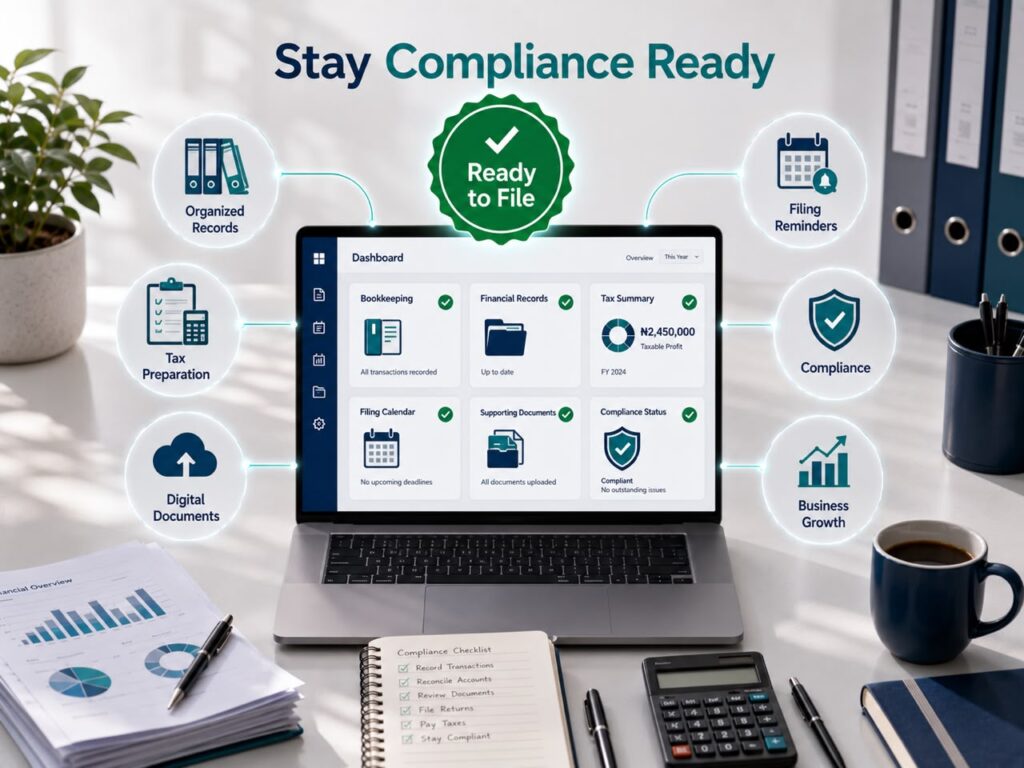
One of the primary causes of filing difficulties is disorganized financial information. When invoices, receipts, financial statements, and tax computations are scattered across different systems or prepared only at year-end, businesses often experience unnecessary delays and avoidable filing errors.
FileAm addresses this challenge by helping businesses organize their financial records in one structured environment throughout the accounting year.
With organized financial information, businesses can:
- maintain accurate bookkeeping throughout the year;
- reduce missing documentation during tax preparation;
- improve the accuracy of annual corporate tax returns;
- prepare financial statements more efficiently; and
- remain consistently ready for future compliance obligations.
Rather than treating tax filing as a stressful annual event, businesses using structured financial management systems are better positioned to manage corporate annual return tax in Nigeria with greater confidence and efficiency.
Conclusion
Understanding corporate annual return tax in Nigeria becomes much easier when businesses have access to accurate information and establish good compliance habits from the beginning. While annual corporate tax filing may initially appear complex, most compliance challenges can be avoided through organized recordkeeping, careful preparation, and timely submission of complete and accurate returns.
Businesses should remember that successful compliance involves more than calculating tax correctly. It also requires maintaining reliable financial records, understanding the deadline for corporate tax returns in Nigeria, preparing all required documentation, and reviewing submissions carefully before filing.
Equally important is recognizing that delays in meeting tax obligations may expose businesses to penalties for late payment of corporate tax in Nigeria, where additional liabilities remain outstanding. Monitoring filing timelines and responding promptly to any identified issues can significantly reduce compliance risks.
Ultimately, the answers provided in this guide demonstrate that corporate tax compliance is not simply about meeting statutory requirements; it is about building strong financial management practices that support business growth, regulatory confidence, and long-term operational success. Businesses that combine accurate recordkeeping with structured compliance processes and reliable tools such as FileAm will find annual corporate tax filing significantly more efficient and less stressful.
Leave a Reply