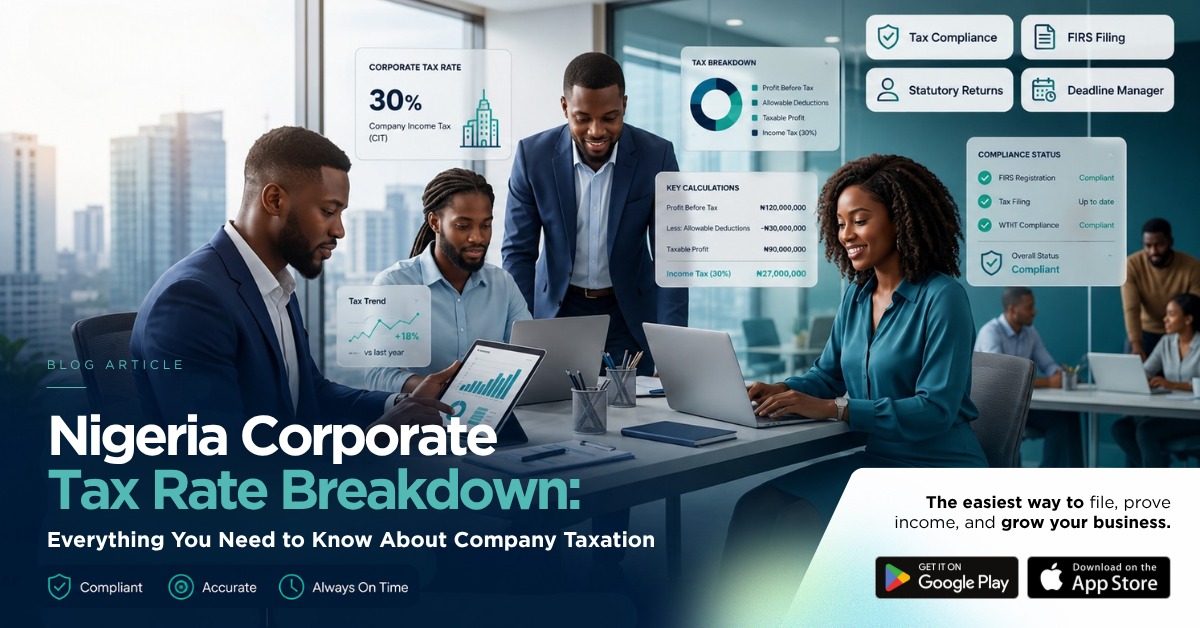
If you own a business or company in Nigeria or plan to start one, understanding corporate taxation and corporate tax compliance in Nigeria is essential. Taxes are more than just a legal obligation; they directly affect your company’s profitability, cash flow, and long-term growth. Yet many entrepreneurs and business owners find Nigeria’s tax system confusing, especially when trying to determine how much tax they should pay and when.
The good news is that corporate tax in Nigeria is more straightforward than many people think once you understand the basics. Whether you’re running a small startup, a growing enterprise, or a large corporation, knowing the applicable tax rates and compliance requirements can help you avoid penalties and make smarter business decisions.
Continue reading to learn more.
Corporate tax compliance in Nigeria
Corporate tax, officially known as Company Income Tax (CIT), is a tax imposed on the profits earned by companies operating in Nigeria.
Corporate tax compliance in Nigeria is administered by the Federal Inland Revenue Service (FIRS) and applies to both Nigerian-owned businesses and foreign companies that generate income within the country.
In simple terms, if your company makes a profit, a percentage of that profit is payable to the government as tax.
Corporate taxation is governed primarily by the Companies Income Tax Act (CITA), along with various tax reforms introduced over the years to support economic growth and improve tax administration.
How Corporate Tax Is Calculated

Many business owners mistakenly believe that tax is charged on total revenue. In reality, corporate tax is usually calculated on taxable profits.
The process typically follows these steps:
- Determine total business income.
- Deduct allowable business expenses.
- Calculate taxable profit.
- Apply the appropriate corporate tax rate.
For example, if a company generates ₦200 million in revenue and incurs ₦120 million in allowable business expenses, its taxable profit would be ₦80 million.
The applicable tax rate would then be applied to that ₦80 million profit rather than the total revenue.
Other Taxes Businesses Should Know About
While Company Income Tax is the most widely discussed business tax in Nigeria, it is not the only tax companies may encounter.
Value Added Tax (VAT)
Value Added Tax is charged on the supply of taxable goods and services.
Businesses that meet registration requirements are responsible for collecting VAT from customers and remitting it to the appropriate authorities.
Unlike corporate tax, VAT is not based on profits. Instead, it is a consumption tax paid by end users and administered through businesses.
Withholding Tax
Withholding Tax serves as an advance payment of income tax.
It is deducted at source during certain transactions and later credited against the recipient’s final tax liability.
Businesses often encounter withholding tax on contracts, professional services, rents, commissions, and dividends.
Development Levy and Other Statutory Charges
Depending on the industry and regulatory environment, companies may also be required to pay additional levies and statutory charges.
These obligations vary by sector and should be considered when preparing annual budgets and tax plans.
Other Taxes Businesses Should Know About
In understanding corporate tax in Nigeria, there are different types of taxes companies and businesses should know about. While Company Income Tax is the most widely discussed business tax in Nigeria, it is not the only tax companies may encounter.
Value Added Tax (VAT)
Value Added Tax is charged on the supply of taxable goods and services.
Businesses that meet registration requirements are responsible for collecting VAT from customers and remitting it to the appropriate authorities.
Unlike corporate tax, VAT is not based on profits. Instead, it is a consumption tax paid by end users and administered through businesses.
Withholding Tax
Withholding Tax serves as an advance payment of income tax.
It is deducted at source during certain transactions and later credited against the recipient’s final tax liability.
Businesses often encounter withholding tax on contracts, professional services, rents, commissions, and dividends.
Development Levy and Other Statutory Charges
Depending on the industry and regulatory environment, companies may also be required to pay additional levies and statutory charges.
These obligations vary by sector and should be considered when preparing annual budgets and tax plans.
Corporate tax in Nigeria Deductions: What Expenses Can Be Claimed?
One way businesses and companies legally reduce their tax burden is through allowable deductions. The Nigerian tax system permits companies to deduct expenses that are wholly, exclusively, necessarily, and reasonably incurred for business purposes.
Common deductible expenses include:
- Staff salaries and wages
- Office rent
- Utility bills
- Advertising and marketing costs
- Professional fees
- Insurance expenses
- Business travel costs
- Equipment maintenance
- Certain financing costs
But to benefit from these deductions, maintaining accurate records is critical. Businesses and companies should keep receipts, invoices, contracts, and other supporting documents in case of a tax audit. Poor documentation can result in denied deductions and higher tax assessments.
Filing Corporate Tax in Nigeria (Returns)
Every registered company in Nigeria is generally required to file annual tax returns, regardless of whether it made a profit during the year.
Tax returns typically include:
- Financial statements
- Tax computation schedules
- Capital allowance claims
- Supporting documentation
- Evidence of tax payments
Timely filing is essential.
Late filing can attract penalties, interest charges, and unnecessary scrutiny from tax authorities. Many businesses now use digital platforms and professional tax consultants to simplify the filing process and ensure compliance.
Common Corporate Tax Mistakes Businesses Make
Tax compliance problems often arise from avoidable mistakes.
Here are some of the most common errors:
Mixing Personal and Business Finances
Many small business owners fail to separate personal spending from company expenses, creating confusion during tax preparation.
Poor Record Keeping
Incomplete financial records make it difficult to calculate taxes accurately and defend deductions.
Missing Deadlines
Late filing and delayed tax payments can result in financial penalties that could have been avoided.
Underestimating Tax Obligations
Some businesses focus solely on income tax and overlook VAT, withholding tax, and other statutory requirements.
Ignoring Professional Advice
Tax laws evolve regularly. Professional guidance can help businesses stay compliant and identify legitimate tax-saving opportunities.
The Value of Tax Planning
Avoiding taxes is not the goal of tax preparation. It is about effectively and lawfully handling tax obligations.
Businesses can benefit from effective tax planning:
- Boost cash flow
- Minimize the risks associated with compliance
- Make the most of the incentives offered
- Steer clear of needless penalties
- Encourage long-term expansion plans
Owners of businesses are frequently in a better position for long-term success when they incorporate tax planning into their financial management procedures.
How Tax Compliance Benefits Your Business
Many entrepreneurs view taxation (corporate tax in Nigeria)solely as an expense. However, proper tax compliance offers several advantages.
Compliant businesses are often better positioned to:
- Secure bank loans
- Attract investors
- Participate in government contracts
- Build credibility with partners and customers
- Expand into new markets
A strong tax compliance record demonstrates financial responsibility and corporate governance, both of which are valuable for business growth.
How Businesses Can Stay Ahead of Tax Changes
Nigeria’s tax environment continues to evolve as the government introduces reforms aimed at improving revenue generation, encouraging investment, and simplifying compliance. For business owners, staying informed about these changes is just as important as paying taxes on time.
One of the best ways to remain compliant is to regularly review updates from tax authorities and monitor changes that may affect your industry. Businesses should also conduct periodic internal tax reviews to identify potential compliance gaps before they become costly problems.
Working with qualified accountants, tax consultants, or financial advisors can provide valuable insights into changing regulations and available tax incentives. These professionals can help businesses prepare accurate returns, maintain proper documentation, and develop tax-efficient strategies that align with current laws.
Additionally, investing in reliable accounting software can improve record-keeping, reduce errors, and make tax reporting more efficient. Businesses that proactively manage their tax obligations are often better prepared for growth, audits, and changing regulatory requirements.
Final Thoughts
Understanding corporate tax compliance in Nigeria is one of the most important responsibilities of running a successful business or company. In addition, understanding Nigeria’s tax laws and keeping records. From determining the correct tax rate to maintaining proper documentation and filing returns on time, every step plays a role in protecting your business from unnecessary risks.
While tax regulations may seem complex at first, the key is to stay informed, maintain accurate financial records, and seek professional guidance when necessary. Whether you’re a startup benefiting from tax exemptions or a large corporation subject to the standard tax rate, understanding your obligations can help you make smarter decisions and keep your business on the growth path. Corporate tax compliance in Nigeria is a serious issue that needs to be taken with more seriousness and understanding.
As Nigeria’s tax landscape continues to evolve, businesses that prioritize compliance and strategic tax planning will be better equipped to thrive in an increasingly competitive environment.
Leave a Reply